The Edge

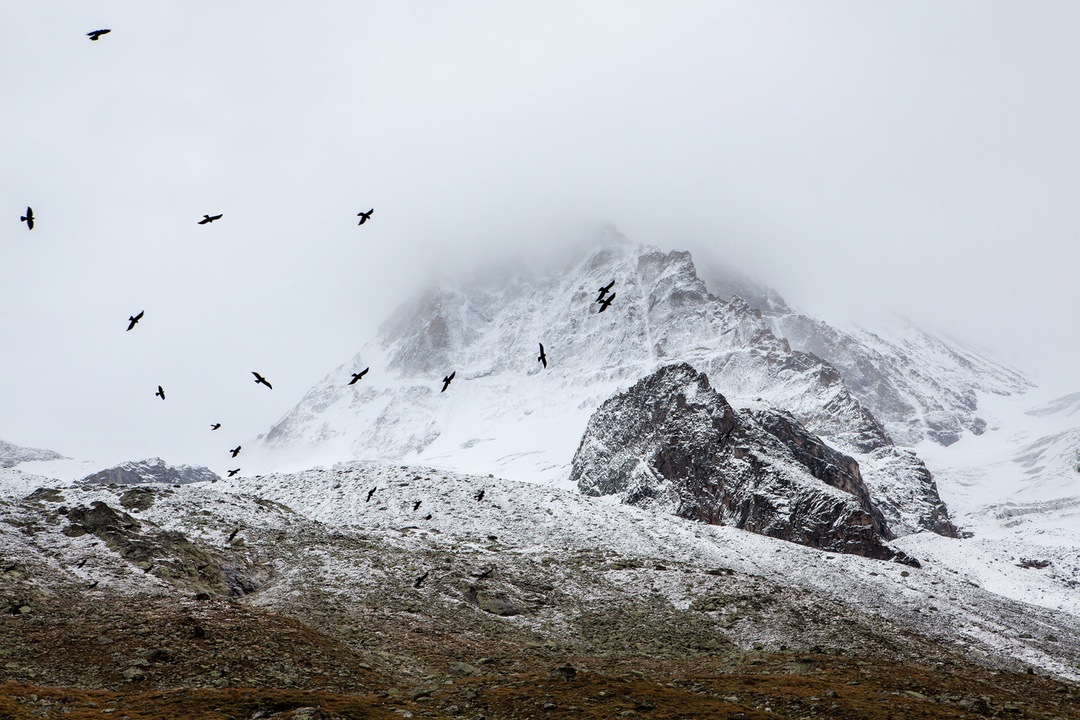
edge

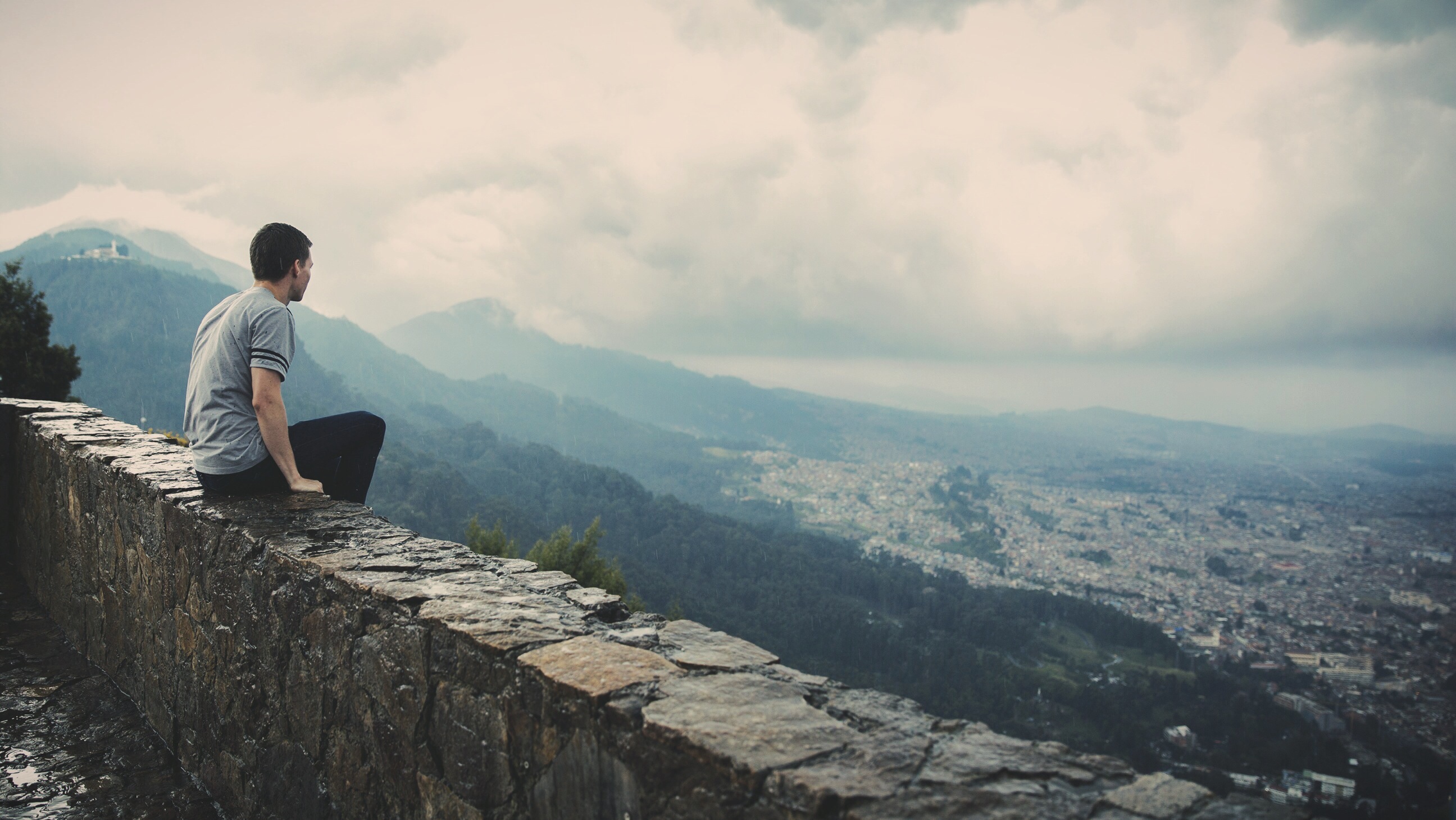
I like to sit on the edge of high up places and look out.

Don’t worry.  I’m not going to jump.

I’m not ready to die, and I know I can’t fly. Not yet.

When you look out at the world and you can’t see the ground, even though it is solid under you, you really experience the landscape.  You feel its vast openness and its wild untamed nature.  For once the air is as important to you as the earth, and the totality of everything is right there.

You know that feeling inside when you’re much too high?  Your stomach swoops and your heart beats insistently and your head feels like it belongs to someone else.  You are just a little out of control but very, very alive, and at least half of you is screaming, “Make it stop! Go somewhere safer!” but the other half of you ignores it, and the tension is exquisite.

That feeling keeps pulling me back to the edge.

I work at a tennis racquet factory.  It’s not an exciting job, but I have been there long enough to be moved into the quality control room.  It’s much better than last year’s job applying the paint and lacquer finish.  That required wearing a mask all day, and I still went home smelling of chemicals. All day long, I test a random sampling of racquets, putting them in machines, applying pressure, taking measurements.  It’s repetitive.  I have a lot of time to think about the balance of strength and flexibility.

When I was six years old, my grandfather died. I had never met him because on the day my mother married my father, my grandfather said he would never see her again.  He was a man who always kept his word, my mother said.  That is the only thing I knew about  him.

She took me to his funeral.  My father refused to go.  “He wouldn’t have gone to mine,” he said.  But she said nothing can ever make you stop being family, so we went.

I remember that everyone there was very old, and I felt shy and wouldn’t leave my mother’s side.  I don’t remember the service, but afterwards we went to the highest point in the city to release his ashes into the wind.  My mother, as my grandfather’s only child, went right up to the edge to open the velvet box.  I was afraid of heights, but I was more afraid of the crowd of wrinkled faces, so I went with her.  I watched the ashes blow out over the city.  For one second, closer to the edge than I’d ever been before, I felt what they must feel, drifting without any anchor, for one hour completely free from the earth before returning to it forever.

My mother looked beautiful in her black dress, standing there at the edge.  She stood very straight as she accepted the condolences of my grandfather’s friends.  Her eyes were sad, but she did not cry.  I was proud that she was my mother.

Later, as everyone was loading into cars to return home and go on living, I heard two old men talking.  The one said that he had been in the air force with my grandfather during the war.  They had jumped out of airplanes, parachuting behind enemy lines.

“This was a fitting end, then,” his friend said.

“No,” he answered. “He always hated jumps. Said man was never meant to fly.”

My mother took my hand.  I couldn’t tell if she had heard or not.  I looked at her as she sat next to me in the back seat of the car.  I wondered if releasing his ashes from up high was her idea.

I never asked, but I hope it was.

I’ve been seeking out edges ever since.

In the tennis racquet factory, there is a door that very few people know about.  It leads to a long set of stairs and eventually out onto the roof.  No doubt there is a rule against going through that door, but no one has ever stopped me.  I take my lunch up to the flat roof and sit on the edge, letting my legs dangle as I eat my cheese sandwich. There is nothing between me and the wind.  My crumbs blow away, going where I can’t yet go.

Sometimes when I’ve finished eating I call my mother.  She and my father have opened a restaurant, and she seldom leaves the kitchen before dark.  It is hard work, but they are happy.  This is their dream, something they have made together.  Something that won’t grow up and move into an apartment as I have done.

We don’t say much on the phone, but I know she hears the wind rushing past the receiver. She doesn’t mention it.  She speaks of ordinary things like menus and the price of fresh fish. I wonder if she knows that it is her voice as much as the cement I sit on that tethers me to the earth.

I’ve never asked, but I hope she does.


Truer Lies 

Colonel Jessup was right.  We can’t handle the truth.

We like some truths, of course.  It’s true that no matter how horrible winter is, spring always follows it. (Thank God.) It’s true that we live in a huge world full of beauty.  It’s true that we share this world with an astonishing variety of human beings and other creatures.  We are not alone here.  These are pretty happy truths, universally acknowledged and easy to accept.

But so many truths are much harder to face.  Reality is tough to swallow.

The truth is that we suck.  We’re all selfish and afraid and think ourselves way more important than we are.  We just do.

The truth is that the world is full of atrocity.  People oppress, enslave, rob, rape, and murder each other every day.

The truth is that the planet is indifferent to us.  Tornados, earthquake, hurricanes, tsunamis, blizzards.  They just keep coming and there’s nothing we can do to control it.

The truth is that every single one of us is going to die.  Our lives will end, sooner or later, and there’s nothing we can do to stop it.

Depressed yet?  Is it any wonder we mostly prefer to lie to ourselves?

We all know the extreme cases. Holocaust deniers. Schizophrenics. People who are convinced that Elvis is alive and they’ve seen him.

But we’re not that bad.  Not the rest of us.  We don’t go that far.  In fact, what we do isn’t even really lying (is the first lie we tell ourselves).  We just…spin.  We refocus.  We ignore.

“I’m not a bad person.  I had to do it.  If I hadn’t that person would have taken advantage of me.  We all have to look out for ourselves.”  True? True, but just because you aren’t rewriting the holocaust doesn’t mean you’re being honest about your own history.

“I am cautious and careful and wise.” True, but still avoiding a bigger truth. If I focus really hard on driving the safest car and taking the most expensive vitamins and keeping scary people at arms length, I can convince myself that I’m safe, that I won’t be touched by the tragedy that touches others.

“I’m so busy.  My work, my family, my charity work, excercise, shopping” True, and good for me for working hard.  What I’m not saying, though, is that if I maintain constant motion, if my mind is crammed full of the details of my life, then I don’t ever have to think about what’s happening to people outside of my immediate line of sight, and I most certainly don’t ever have to think about my own eventual end.

Does that seem too harsh?  I actually feel uncomfortable typing out the words.  Plain speaking is one thig, but this all feels judgmental and negative and really, how helpful is it for me to point out the obvious?

THIS IS WHY I TELL STORIES.

Unlike facts which are so useful for avoiding reality, STORIES ARE THE LIES WE TELL TO HELP US FACE THE TRUTH.

I don’t ever want to write a post like this again.  I don’t want to tell you that it’s easier to ignore reality than stare it down.   I want to tell you a story.

Once upon a time there was a princess who reached the age that her parents decided she should marry.  Being a princess, she was naturally not allowed to choose her own husband.  A member of the royal family had to be suitable.  Her father chose a man for her marry.  He was a prince from the neighboring kingdome, the seventh son, so he had nothing to keep him in his own country.  A week before the wedding, the prince arrived at the princess’s castle.  he looked okay on first meeting, but over dinner, when she tried to talk to him, she realized that he was spoiled, arrogant and more interested in dogs than in people.  Throroughly depressed at the idea of marrying such a person, the princess went for a walk in the garden late that night, weeping.  Just as she passed the pond, she heard a loud croak and a frog jumped out from behind some bushes.  The frog had some vines wrapped around his head exactly like a crown.  Glad to be distracted from her own worries, the princess stared at the frong, thinking how mmich  like a prince he looked and becoming convinced that he must be one under a spell.  Believing that she could undo the spell by kissing the frog, the princess picked up his repulsive fat body, congratulated herself on being able to see past the external to his true heart, and kissed the frog.  Nothing happened.  She kissed the frog again, with more feeling this time.  Nothing happened.  She put all her heart and sould into it and kissed the frog once again.  This time, hating how hard she was squeezing him, the frog leaped out of her hands and disappeared under the bushes again.  With a cluck, her old nanny stepped of the shadows.  She had been following the princess, worried about her extreme sadness.  Now she realized that it was time the princess was told a few things, starting with the fact that the chief characteristic of frogs was that they were completely froggy (and also that they had a tendency to get tangled up in vines from time to time) and ending with the fact that when princes were kept at home with only dogs for company and given everything they ever asked for, they tended to be a bit spoiled and backward.  The princess went home.  She married the dog-loving prince.  They traveled, and he learned to be interested in a few other things besides dogs.  The princess found that she wasn’t completely uunhappy with him.  When the time came, they made a very passable king and queen.  The citizens of their country lived happily ever after, as they would never have done with a frog for their ruler.

Not the finest story ever, I grant you, but way more fun to read than “The truth is that we all are who we’ve been made to be and we may as well accept that other people are, too.”

So yep, I’m sticking to the storytelling.  And I promise the next time I mention the inevitablity of death, it will be a fictional character who dies, so we can all wear sunglasses and squint at it sideways. Some realities are too glaring to take in all at once.

Friendly Advice

birds

There’s a bird that keeps circling around my head
I don’t know how to get rid of it
I’ve screamed and I’ve yelled and I’ve waved my arms
But that creature ignores every bit of it

No offense to you, friend, for I’m sure that’s annoying
But it’s hard to feel sorry for that
You could solve your big problem quite simply, you know
If you’d take off your birdseed hat

I, on the other hand, have a true worry
I have such a long way to travel
But my feet are so hot, and the ground is so rough
That I’m fearful my shoes will unravel

Are you hot? You should try having shade on your head
Birdseed hats are a good thing to choose
And as for your feet, you are wasting time fretting
Just take off those knitted wool shoes


Monday Morning Treasure, the Real People Edition

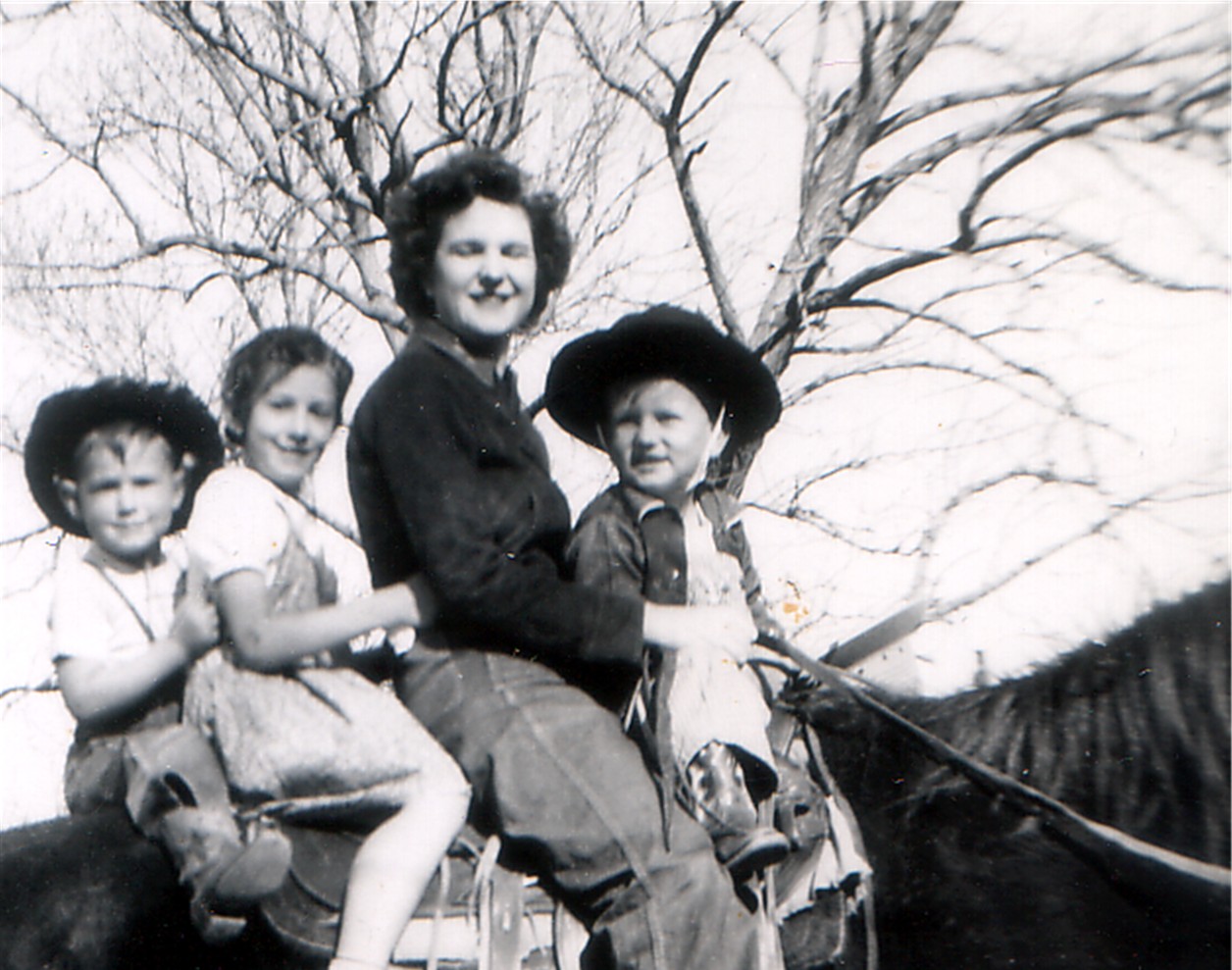
Helen,JerryDale,GailandDuaneonhorsearound1950

The seed of our destruction will blossom in the desert, the alexin of our cure grows by a mountain rock, and our lives are haunted by a Georgia slattern, because a London cutpurse went unhung. Each moment is the fruit of forty thousand years. The minute-winning days, like flies, buzz home to death, and every moment is a window on all time.
-Thomas Wolfe, Look Homeward, Angel

The stories being lived out all around me, the stories lived out in days long gone, they matter.  My life isn’t lived in a vacuum. On the contrary, every cell in my body is recycled matter.

I’m taking some time this week to feel my insignificance, my teeny tiny thread in the giant tapestry that is all of us and all of history.

With that in mind, here are some real people who are doing real things.  Their stories put little tendrils into my brain in the last couple of weeks, and I’m wondering if they’ll do the same for you.

  • Someone whose world view is divergent from my own, but whose mother heart is feeling its way through the darkness in the same way as mine.
  • Lola Akinmade Akerstrom: Her whole story is fascinating, but I can’t stop thinking about her words on adapting the pursuit of your dreams once you have a family. So balanced and wise.
  • Not everything you do has to change the world.  Sometimes a little chalk can be enough.
  • Over the Rhine never ceases to inspire me, and Linford’s take on the continuity of our stories is stunningly beautiful.
  • Most wonderful of all, our stories are still in progress, and every day is a chance to make our life a really good tale.
  • A Meditation on Pain.  This story haunts me.
  • And before you get too depressed, read this.  You’ll be thinking about your own beauty for the rest of the day. (Seriously. Just read it.  You’ll see what I mean.)

Okay, enough internet.  I’m off to to get all my work done so I can start reading Look Homeward, Angel again because Thomas Wolfe’s lush, gorgeous language is all stuck in my head now.  The man was a depressing lunatic, but he could do things with words that make the hair on the back of my neck stand up.  And yes, that’s a recommendation.

P.S. That photo up there is my grandmother, on a horse with three children, because WHY NOT.  Remind me to tell you bits of her story sometime.  In my heart, that woman belongs on this list. (Which is a high honor, but only click that link if you’re feeling brave and don’t mind a whole lot of foul language with your hilarious feminist sarcasm.)

Harold Blight and the Third Door

Harold Blight was a sleepwalker.

As surely as every day he would wake up at 6:45 sharp, eat a bowl of oatmeal with cinnamon on top, and dress in a crisply clean suit and tie, every night he would fall into a deep sleep at 9:45 sharp, get out of bed twenty minutes later, and unlock the back door to wander the darkness.

If anyone at the high school where Harold taught eleventh grade chemistry had heard of his nighttime ramblings, they would have been astonished.  Who would ever have guessed that the perfectly combed Mr. Blight had a sleeping explorer inside?

To be fair, Harold Blight was only vaguely aware of it himself. He often thought that he did not awake as rested as he ought from his nine hours of sleep, and once or twice he had been startled to awareness by some noise and found himself in his back yard.  So far, though, he had always been able to silence the whispering voice in his head suggesting that his life was not what it appeared.

It was only the aliens, then, who witnessed the extent of Harold’s adventures.

At first, watching him was only a matter of staving off boredom.  Studying the patterns of homo sapiens was fascinating by day, but at night most of them just lay around for hours and even the twenty-somethings that passed the night in bars or the teenagers that sneaked out their windows engaged in the most predictably boring behaviors.  Harold Blight’s nighttime journeys were the most interesting show in town.

Sleepwalking Harold was a daredevil. He liked to balance himself on fences and walk the length of them with his arms stretched out. He liked to climb tall trees and then leap from one to another. He liked to plunge into the nearby lake and see how long he could hold his breath.

Sleepwalking Harold was an artist. Three times he used his bare hands as the mud to paint a still life on the side of the Henderson’s shed. Once he used his old-fashioned push mower to cut an empty field into a picture of the president’s face. And nearly every night he found sleeping birds and poked them awake so he could harmonize with their songs.

The aliens never knew what the crazy man would get up to next.

It was the night he painted his face to look like a bird and then stood in the middle of the street playing chicken with the cars that they were first tempted to interfere.  Unlike fences, cars were deadly, and if anything happened to Harold Blight, the aliens would be back to drinking way too much zorlag at night to stay to awake.

Direct interference was forbidden, of course. You didn’t ruin centuries of scientific study just because you thought zorlag was ruining your health. But introducing a subtle change in the landscape would not alter history, or at least not enough to draw the attention of their supervisors.

That’s when Harold’s bedroom got a third door. The first door led to the hallway, of course, and the second to his neatly organized closet.  The third door led to an alternate dimension, where Sleepwalking Harold could explore distant universes in relative safety.

Sleepwalking Harold ran with herds of Paloxis on the wide open plains of Benarfa Faloomp, and Harold Blight wondered why his pajamas were covered with feathers. He exchanged his down pillows for cotton.

Sleepwalking Harold climbed the endless stair of the tower of Harnak Ratha, and Harold Blight had sore feet for a week. He went out and bought new Naturalizers.

Sleepwalking Harold flew through the rainbow tinted atmosphere of Haroliris, and Harold Blight couldn’t stop smiling for days. On a whim he brought home a dreamcatcher from the street fair and then hid it in his closet when his friends came for game night.

Sleepwalking Harold went through the third door every night while the aliens placed bets on his next burst of impulse, and Harold Blight went off to teach every day while the aliens took notes on his extraordinary denial.

Hypothesis were formed, controlled experiments conducted. A very well-received academic paper was published. A prestigious award was handed out.  Roasted Paloxi from Benarfa Faloomp was served at the reception after.

Harold Blight woke up at 6:45 sharp, shook the sand from his hair, ate a bowl of oatmeal with cinnamon sprinkled on top, and, being careful of his sunburned neck, dressed in a crisply clean suit and tie.

He sang Beach Boys songs all the way to work and looked forward to 9:45 and another good night’s sleep.


We Jump

But I still ultimately disagree with the concept of saving people from themselves. Individuals have the right to pursue dangerous activities, as long as those activities don’t affect the lives of people who do not wish to be involved — and that extends into the realm of activities for which the downside cannot be predicted.
-Chuck Klosterman (in The Hazards of Other Planets)

I have been thinking a lot lately about the Mars One colony.  And yes, I know the whole thing is super iffy and there is reason to believe it will never actually happen, but the idea of colonists on another planet, not in the pages of a book but in the real world, captures my imagination, and I have the luxury these days of spending time with things that capture my imagination.

The thing I love about Mars One is the daring of the whole thing. Daring to say that such an incredible thing could happen and daring the world to laugh at it. I don’t even care if money is the sole motivator. It’s a gutsy move. And all those people applying to be colonists. Knowing full well that they’d be heading out on an expedition they’d never come back from.  Knowing full well they could die in some horrible fashion or (worse?) live a long time locked up with a bunch of crazy people.  Knowing full well that they could be mocked mercilessly if the whole thing turns out to be a ridiculous hoax.  I don’t care if they’re nutballs. It’s a gutsy move.

More people should be this gutsy.

superstars

Security is mostly a superstition. It does not exist in nature, nor do the children of men as a whole experience it. Avoiding danger is no safer in the long run than outright exposure. Life is either a daring adventure, or nothing.
-Helen Keller

I still remember the first real risk I took.

I was 22. Sitting in a black Ford Taurus, next to one of my best friends in the world, late at night. It was Halloween.  Deep breath. Pounding heart. Unable to bear the idea of just swallowing everything I felt and going home to bed, safe and miserable. So I said it. I hedged a little. I worded it cautiously. But I said it. I suggested that maybe, just possibly, it was time to be more than just friends.

Sixteen years later that risk is still paying off so big it’s hard not to be reckless every minute.

cafe

We are the curators of our own lives. Curators make choices. Like when I was 21, 22 years old, I was selling vacuum cleaners, and probably making $125 to $150 a week. But when an opportunity came along to act in a play in Hollywood making $50 a week, I took it readily. That’s a curator’s choice. I felt my selling vacuum cleaners wouldn’t do anything for me as an artist.
-Leonard Nimoy (from an interview with Esquire in 2013)

All art is inherently risky. I’m taking this part of myself and throwing it out there into the world where anything can happen to it.  It can be criticized. It can be mocked. Or (worst of all) it can be ignored.

Not can be. Will be.

We’re too old to go into this with illusions about that.

But I’m in a rare position in history and geography.  I’m here in a place where I am free to create. I’m educated enough to create.  I’m safe and well-fed and warm enough to create. I have all the tools I need to create. I have no excuses.

I will lay it out. I will tell stories that only a few will hear. (Not no one. Just not enough. Never enough for my fragile ego.) And I will remind myself why I do it.

I do it because I can.

I do it because I’m alive and because I want to keep being alive.

mountain“If you have built castles in the air, your work need not be lost; that is where they should be. Now put the foundations under them.”
― Henry David Thoreau, Walden

It gets harder to take risks as you get older.  Life has rubbed off your boundless enthusiasm and confident optimism.  Consequences are real to you because you have seen them and felt them.  More is at stake.  Those consequences won’t just be your own. Small lives depend on you.

But to stop risking is to stagnate, to cease forward motion and begin to circle. Any scientist can tell you that orbits are dangerous. A little bit of drag and your orbit decays, your crash is inevitable.  (Or what’s the better option really? Endless circling?)  Those consequences won’t just be your own. Small lives depend on you.

Not risking is not an option. Now we learn to risk differently. To choose our risks with open eyes, counting the cost. To commit ourselves to old-fashioned hard work, to following through, forcing the ephemeral into reality with the bleary-eyed doggedness of 5 am.

We dedicate ourselves to sacrifice our own needs to achieve our dreams and to never demanding that others sacrifice theirs. We take a deep breath and we accept the probability of failure. We stare it down and we plan more carefully than we ever have in our lives for how to survive it.

We hold our responsibility and our daring in constant tension and we hold on to each other to keep it from pulling us apart.

We choose our mountain and we climb it day after day. Hand in hand we approach each new chasm and, not daring to blink, we jump.

“A life spent making mistakes is not only more honorable, but more useful than a life spent doing nothing.”
― George Bernard Shaw

The Weirdo In the Attic

Though the rest of my house is respectably formal
The girl in the attic is far, far from normal
She’s lived there as long as I can remember
Wearing snow caps in June and flip flops in December

While the downstairs is neat, decorated with taste
Top floor girl’s gathered everything ever misplaced,
She’s got magazine clippings on every wall
Odd socks, piles of books, a deflated football

And though everyone else eats at regular times
I can smell her fry onions before dawn bells chime
She’ll bake cookies at midnight, at 3 am, pie
(And it smells so delicious I think I might die)

At any odd hour of the night or the day
I’ll hear music or banging or sometimes a neigh
I think she’s rehearsing for some kind of circus
(She really must do it on purpose to irk us)

She forgets things that others consider essential
Like trash day, which she seems to find inconsequential
She misses appointments or comes late wearing slippers
Her hair is askew, she has trouble with zippers

Naturally having her there mortifies us
We’ve talked of eviction on days when she tries us
But somehow we never quite get around to it
At this point I don’t think we ever will do it

It’s partly because her peach pie is so tasty
And she gives great advice when you’re being too hasty
But mostly this house is so bland and so plain
The weirdo up there is who’s keeping us sane

My Story, Their Story

It started with an innocent comment about the difference in our ages. 28 years. And yes, my daughter is 10, so there goes all the mystery about my age.

Somehow that led to the question why. Why 28? Why was that the age I finally decided to have a child? And how long had I been married? And how old was I when I got married? And speaking of getting married, what was that like anyway?

Questions like that don’t have a succinct answers. Questions like that have stories.

I was sixteen, far from home, super excited about a summer of working hard with other teenagers, super nervous to be sitting in the big group of them, super self-conscious and wondering what they all thought of me. Was my hair too frizzy? Did I look calm enough? Why didn’t I wear the other jean shorts? When they asked people to talk about themselves, I started planning. Be genuine. Tell the truth. Sound confident. Don’t say anything stupid. Don’t act like you aren’t trying to say anything stupid. Some guy in the row behind me stood up for his turn. The minute he started talking, my eyes got big. He was earnest. He was impassioned. He used big words and made no effort to sound cool. He talked about why he was there and how much he wanted to serve people. And I sat in my chair and thought, “What is with this dude? There is no way this guy is for real. No one actually talks like that.” And I looked around the room. And I wondered which of the people I saw were going to be my closest friends.

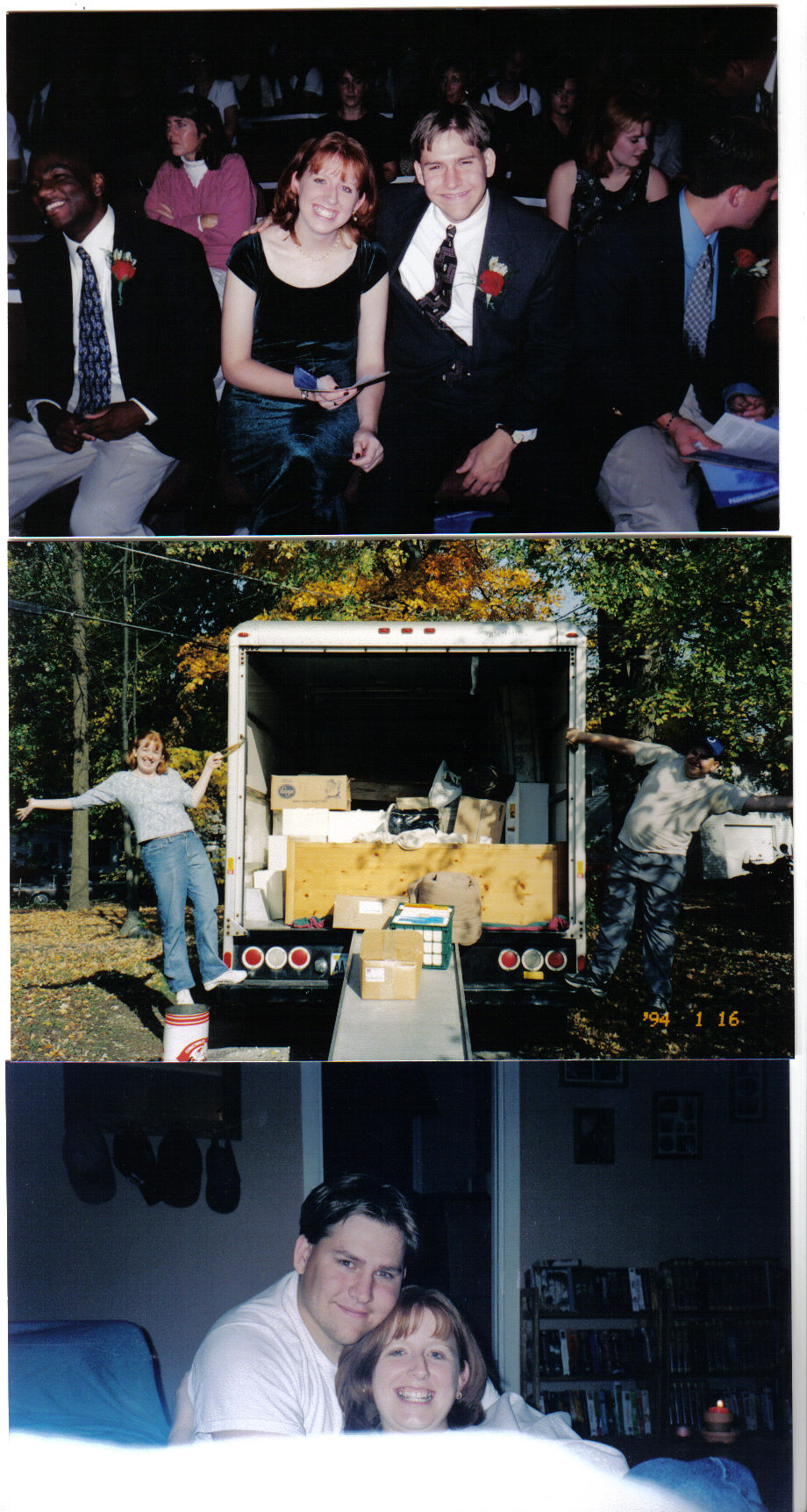
scan1

The five-year-old completely lit up. She is the princess of stories anyway, but these stories were real. These stories were true. These stories were about her favorite people in the whole world.

These stories were also pieces of fantasy. These stories were about people who don’t exist anymore. These stories were about people she could only imagine.

It was my sophomore year of college and I had a job off-campus waiting tables. It was hard to squeeze in the hours between classes and rehearsals and homework, but college wasn’t going to pay for itself. On my way home from one long shift, still smelling like pizza and the bleachy spray I had used to clean up the salad bar, the back tire of my little car blew out, leaving me stranded in the rain. Making a phone call meant walking to the nearest gas station and popping quarters in a pay phone.  I considered calling my brother, but I couldn’t risk wasting my quarter if he was too busy, so instead I called the one person that I knew would come no matter what else he was doing. I called my friend Nate. He came. He changed my tire in the middle of a mud puddle. He followed me home. And then he brought me the patched up tire the next day and spent an hour showing me how to change a tire by myself.

Even the ten-year-old couldn’t roll her eyes too much. I refrained from lecturing. I refrained from offering dating advice or mentioning the best age to get married. (I’m not sure that I have any. I’m not sure that there is one.)

She’s heard a few of these stories before, but somehow they just don’t get old. Not when it’s your parents. Not when it’s the story of how you came to be.

That summer was the hardest one I had ever spent. The next year would be my last year of college and I still wasn’t sure what I wanted to do when it was over. I was living with my parents, but they had moved to a new town in a new state, and I didn’t know anyone there but them. I waited tables every hour I could get, and I hiked the mountains alone on all my days off.  My mom asked me to go with her to a funeral. A lovely family in their church had lost a baby. Stillborn. I didn’t know them. I went anyway. It was as heart-wrenching as you could imagine, but the love the little family felt for each other was palpable. I sat there and thought that if I ever had to face such an incredibly horrible moment, I would want Nate to be with me. I mean, I would want my husband, whoever he was, to be there, too, of course, but I would hope that m friend Nate would come and visit me. I thought that seeing him at a time like that would make something so painful a little more easy to bear.

scan4

The conversation came to a natural end. We dropped the oldest off at a birthday party. Back in the car a few minutes later, my little girl asked for more stories. “What else would you like me to tell you about?”

“Maybe you could just give more details,” she said.

We didn’t stop talking all the way home.

It was the best and the most exhausting summer of my life. Study abroad. Two months in Argentina, speaking nothing but Spanish, wandering the streets of one of the greatest cities in the world with one of my best friends in the world. Really good bread and really horrible sinus infections. Adventures and misunderstandings and a World Cup win against England. Plus a few visits with our really good friend Nate who was living as an intern on the other side of the city. Those visits were really something. Eating churros with chocolate and watching this person I’d known so long completely light up from the inside out. The work he was doing. The people who were teaching him. The new ideas. We talked for hours. It was thrilling in a way I couldn’t put my finger on. Until three months later. Back at home. A cold and rainy night when the blankness of my future rose up and threatened to swallow me whole. A long conversation sitting in his car. The mere suggestion that we could…maybe…in some possible reality…be more than friends. “I’m going back to Argentina,” he said. “I know,” I said. And everything in my world fit together.

How do we talk to our kids about love? How do we talk them about growing up? How do we talk to them about dating? About marriage? About sex? How do we talk to them about becoming a parent?

There are no right words. There is no list of rules that ensure they’ll walk the right path. There is no adequate way to explain the complexity of life.

But there is our life. Our triumphs and our mistakes. The things that fill us with pride and the things we bitterly regret. Those things are real and they are alive.

And here’s the real kicker about our stories:  unlike our lectures, our kids actually want to hear them.

What on earth are we waiting for?

The Heart of a Cloud

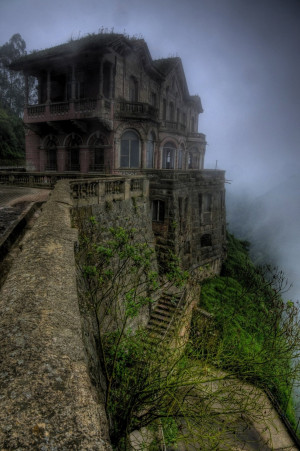
03-Hotel-Salto-del-Tequendama-Columbia-300x451

By the time I discovered the manor at Shrouded Bluff, it had been empty for over a hundred years, but the house had not forgotten people.

I had rented a room in the village below, and the landlady, with a load of other unnecessary chatter, told me about all the best walking trails. When I asked about the bluff, she waved off the question. No one ever walked up there anymore. With all that mist, the stone steps were slippery and dangerous. Yes, there was a trail at the top, but there was no view at all, just a damp walk through the heart of a cloud.

It was the first place I went. I think I had some vague notion that if I went into the heart of a cloud it might make sense of the cloud in my heart.

The landlady was not wrong about the condition of the steps. Not only were they slick with condensation but years of neglect had left them broken and slanted. There was danger with every step. Oddly, this comforted me, to be so focused on the placement of my feet that I could not think about the misplacement of my affections. As I climbed, the cloud reached out and enveloped me, and when I reached the level top, I could see nothing but disembodied limbs of trees emerging from white walls ahead.

I followed the path.

It ran fairly straight, still rising slightly, cutting through the fog with its rough, pebbly persistence. After a while, a stone wall rose up along one side. I attempted to peer over it, and though I could see nothing through the thick mist, I had the impression of a great depth.

The path ad I continued until a dark shape loomed through the fog ahead. The thrill I felt could have been fear or excitement. I had long since lost the ability to distinguish my emotions. In any case, I did not slack my pace as I approached the mysterious monument.

With a jarring suddenness, I stepped out of the mist and into a space of open air. The wall suddenly swept away, curving around a wide lawn. In the center of that lawn was the manor house. It was imposing, two stories, countless windows, well-formed gables, a wide porch, every last bit built of stone. The pebble path led straight to the front door, and I followed willingly.

I never gave a thought to trespassing. The house was clearly abandoned, glass missing from many windows, stone pillars crumbling in places, tufts of grass growing on the roof. The porch steps were firm under my feet, though, and the front door, though not latched in any way, swung open without a creak. Inside, the house was spacious and elegant and heart-breakingly empty. Immaculate crown molding lined the ceilings, each door frame was carved into a work of art, the walls were covered in delicate papers, as lovely as they were faded. The wooden floors, though dusty, were still smooth and unbroken chandeliers dangled from the ceiling.

But there was nothing inside: no furniture, no pictures on the walls, not so much as a forgotten toy or stray comb. No wild animals had made their home here. No birds had taken shelter from the cold and damp. Only I wandered from room to room and the wind that swept in through the windows only to leave again as quickly as it had come.

I wandered from room to room, and tears ran down my face that such a masterpiece of beauty and strength should contain so much emptiness.

The house was glad to have me there. I felt that clearly. I felt how it yearned toward me, how it enfolded me in welcoming arms. It was cold, but it wanted to be warm. It was neglected, but it wanted to be cared for. It was desolate, but it wanted to be filled.

The house remembered people, and its memories were filled with longing.

I don’t recall making any decision. When I had visited every room of the house, I went back outside. I stood for a long time on that neatly encircled lawn. I followed the pebble path back to the slippery stairs. I descended with great caution and emerged from the cloud with little droplets clinging to my hair. I returned to my rented rooms.

The next day I bought a lantern before climbing the bluff.

The day after that, I bought a rug.

The day after that, I bought three small cushions, a music box, and a tea kettle.

This went on for many days. No one every questioned my strange purchases. No one ever asked me where I went each day. Over dinner at night, the landlady chatted of this and that, of village gossip and news of the world beyond, but she never made the slightest reference the Shrouded Bluff over our heads. It was as if I and the cloud made no impression on those around us.

Then one day, I packed my things. I payed my landlady. I climbed the stairs, more carefully than ever before.

The heart of the cloud was quiet and still. It was damp and gray. But it was no longer empty.

As you can see, the manor is a place of warmth and light, a place of music and elegance. The house and I have kept each other company all this time as we waited. We knew you would come one day, climbing through the fog with cautious steps, following the pebble path until your feet stood on our front porch and your hand knocked on our front door.

Please, come in.

Digging Deep: Treasure for your February

February is the worst.

Sorry. Did I already start a post that way? I think I may have. Yeah. Well.

ugly
This is what February feels like to me. Just really a place I don’t want to be.

I was thinking the other day that really, as a storyteller, this ought to be my favorite time of year. The cold has driven us all inside. There’s nothing left to do but huddle around the fire and tell stories. In ancient days that’s how they survived the winter.  Mugs of ale, crackling fire, animal skins, and a minstrel or bard to keep everyone from killing each other. Not much has changed.  I should be in my glory.

Just one problem. I really, really hate being cold. It freezes my brain as well as my toes.

You know those minstrels did all their song-writing in the summer, walking by streams and eating fruit from orchards, and then saved them up for the winter months. I’m pretty sure they had the right idea.

green
Spring. Please tell me you are coming soon.

BUT!!  We have tools available to us that bards of old did not.  When we can’t go outside and find flowers and waterfalls to inspire us we can open our magic boxes and let the internet take us away.

  • Look! Someone is doing something creative and different! Red Rocket Farm is telling stories with illustrations one frame a day.  You can follow it over time at the blog or on their Facebook page.  They just finished up a story, and you can read the whole thing at once now, but here’s hoping a new one starts soon, and we’ll get a little something new to look forward to every day.
  • I’m obsessed with titling these days (mostly because I’m terrible at it). I’ve been struggling for months to come up with a title for my fourth book, and then this morning my husband suggested the perfect one on the first try. I simultaneously love him and want to strangle him. But I comfort myself with Steinbeck: “I have never been a title man. I don’t give a dam [sic] what it is called.” (This in a discussion of what to call East of Eden, which is a perfect title. Read the article. It’s fascinating.)
  • This. This is NOT a good title. title
  • Speaking of titles, this is the best name for an instagram account ever. It’s a pretty cool concept, too.
  • When we’re too cold to make up our own stories, there are always books.  I keep hearing wonderful things about Station 11. Waiting on my library copy with a great degree of impatience.
  • And I know I’m not the only one who’s got “re-read To Kill a Mockingbird” on their to-do list right now. I CAN NOT wait for Harper Lee’s new book.  Have you seen the cover? When you’re this good, you can keep it as simple as you like.
  • This about says it all. And I’m proud to say, I’ve heard it from my daughter about a million times now, too. My work here is done.
  • For some serious inspiration to create, read the transcript of Bob Dylan’s acceptance speech at the Grammy’s. So many emotions. The thrill of hearing him say his songs all came flowing out of the immense amount of music he had imbibed over the years. (I knew my “need” to read wasn’t just an excuse.) A little guilt over how many times I’ve criticized his voice.  (But really…) And some laughs, too:

    Critics have made a career out of accusing me of having a career of confounding expectations. Really? Because that’s all I do. That’s how I think about it. Confounding expectations. 

    “What do you do for a living, man?”

    “Oh, I confound expectations.”

  • And a final laugh for your day. I never get tired of these.

Have a great week, everyone, and heads high.  March will be here soon.