The Case for Laughter

“Don’t worry. All this positivity won’t last. It’s just the fish talking.”

“That’s what I’m worried about.”

“Understandable. Talking fish would be terrifying.”

Cara stared. “Did you just make a joke?”

–TWIN

Can I make the least controversial statement ever? The world sucks these days. It’s not just lately that everyone with any power is using it to oppress anyone with less power. The world has always been like that. But now I’m one of the grown-ups, and the weight of it settles on me in a new way. I’m the girl who could always fall asleep (anytime, anywhere), and now I have nights where I lay awake with anxiety gnawing inside. I know I’m not alone.

I’ve said before that there’s no running away from negative emotions, that they have to be faced and given a name. I believe that with all my heart.

But I’d be lying if I stopped there. Because naming our pain and fear is only the beginning.

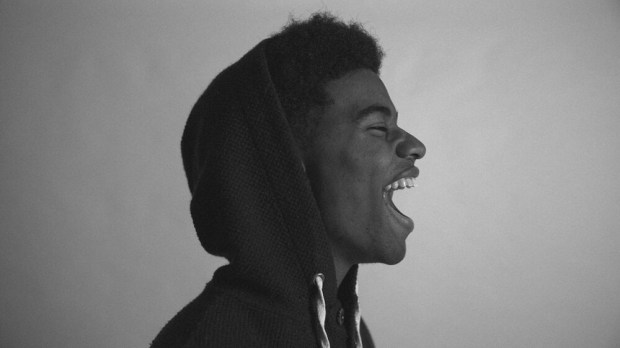
The critical next step is to laugh at them.

Laughter and tears are both responses to frustration and exhaustion. I myself prefer to laugh since there is less cleaning up to do afterward.

–Kurt Vonnegut

My husband and I have been hanging out with hurting people for almost two decades now. We’ve seen some serious horror and lived through some of it ourselves. Sometimes people ask how we’ve kept doing it. Of course, there’s no real answer to that. You keep doing something by, well, not stopping.

But if you want to know one the ways we stay sane, I can tell you: we laugh.

When I’m in bed with a racing mind, my husband makes up songs about our dog. They are epically (comically) bad. When he’s carrying the weight of the world on his shoulders, I make fun of the weight or the world or sometimes him. Only because he likes it. We trade memes. We watch a lot of stand-up comedians and a lot of SNL. Please get us started sometime on our favorite sitcoms.

Sure, sometimes we’re laughing to take our mind of things, watching comedy to escape reality, but our favorite laughter is the kind that cuts reality open rather than denying it. Because laughter is a weapon. It’s a shield to protect us from despair and a sword to skewer our dread.

It was a lot harder to believe you might lose a war when you could still laugh on the morning of the last battle.

–Alwyn Hamilton, Hero at the Fall

Laughter doesn’t just represent a hope that we will conquer our present pain or difficulty; laughter is a victory itself. Laughter says, “I may not be able to control this, but it doesn’t control me either.” If I can laugh, I am still myself. No matter what has happened or will happen, those things don’t define me.

Which is why when I sit with a devastated friend and we laugh at the very situation that’s caused them pain, we almost always say, “This isn’t really funny,” but we keep laughing anyway. Because we can if we want to. I may have no choice but to cry but I ought to at least have the choice to laugh. Is it inappropriate? Yeah. But it wasn’t appropriate that any of this crap happened in the first place. The S.S. Appropriate has already sailed.

And that’s how you go on. You lay laughter over the dark parts. The more dark parts, the more you have to laugh. With defiance, with abandon, with hysteria, any way you can.

–Laini Taylor, Strange the Dreamer

But how do you do it? How do you turn to laughter instead of tears? Obviously, you can’t always get there. Sometimes pain is too great or just too fresh. Some things are so horrific, it feels like a betrayal to laugh in their face. But then, it’s those very things that later breed the darkest and most important laughter.

It’s an issue of perspective. Laughter is powerful because to laugh at something, we have to step outside of it. To the person falling, the experience is only pain. To the one watching from a distance, it’s hilarious. Have you ever seen someone walk into a spider web when you are too far away for the web to be visible? In a split second they go from walking normally to gyrating in a dance of waving arms and whipping head. There is no way not to laugh, even though the same thing has happened to you and you remember the horrible sticky feeling. Perspective shows us that though one side of the experience is an unpleasant shock, the other side is a spontaneous and ridiculous dance.

My point here is not that we should keep people at a distance and laugh at them. On the contrary, when we are watching someone fall, we should put ourselves in their place and empathize with their pain. But that same thing can be done when we are the ones falling. We can put ourselves the shoes of an observer and let ourselves laugh at the undignified mess of our own troubles.

That kind of perspective takes practice; you have to consciously choose to engage it. I read an article a couple of years ago in which a famous preacher quoted one of his old professors, giving a series of resolutions for maintaining mental health. The lecture in question was given the year I was born, so I didn’t have high expectations for his understanding of the topic, but what I read delighted me, and I’ve thought about it often since then. Resolution #1 has become one of my regular practices.

1. At least once every day I shall look steadily up at the sky and remember that I, a consciousness with a conscience, am on a planet traveling in space with wonderfully mysterious things above and about me.

–Clyde Kirby, English professor (from a lecture in 1976)

There’s the perspective we need to laugh on our darkest days. I am one tiny creature in a vast universe. This ball spins and spins in a giant vacuum, and somehow I walk its surface and don’t fall off. On the other side of the world, there’s a woman my age walking upside down and convinced that she’s the one who is right side up. We hurtle through space around a flaming ball, surrounded by dangers that could cause our immediate death. And here we are, walking around in our thin layer of breathable air, content to ignore all of it. The whole thing is deliciously ridiculous.

Truthfully, Professor Kirby’s resolutions are wonderful, and I highly recommend you click through and read them all. I don’t share his disdain for introspection, but I do believe in the importance of not getting lost in it. We balance introspection with intentional engagement in the world in all its intricate variety. In that balance we find joy. I especially love resolution 6:

I shall open my eyes and ears. Once every day I shall simply stare at a tree, a flower, a cloud, or a person. I shall not then be concerned at all to ask what they are but simply be glad that they are. I shall joyfully allow them the mystery of what Lewis calls their “divine, magical, terrifying and ecstatic” existence.

–Clyde Kirby

Every time I read that resolution, I feel my breathing ease. The freedom to see a tree swaying in the wind and not wonder if its beauty is enough to counterbalance the horror in the world. To not think about how I should really do more to take care of the trees in my yard. To not think any important thoughts at all, but just to look at the tree’s motion and feel the satisfaction that such a thing exists in the world. I can listen to my cat purr or breathe in the fall air, and it doesn’t have to mean anything. It can just be joy.

That’s the lesson of inappropriate laughter. Joy can liv e alongside sorrow and laughter can live alongside pain, and the two don’t have to be at war. They can just be.

And I can take the weight of the world off of my itsy-bitsy shoulders and laugh that I ever thought I could lift all that anyway.
Behind the Door

He had never seen her like this, lost and unsure. Without her unshakeable calm, she was a different Cara.

For the first time, he realized that meant he had to be a different Tom.

–TWIN

I can still remember the day I realized that in the story of my life I was as much villain as hero. I was at that in-between age, not completely a child but definitely not an adult. Most of my free hours in those days were spent holed up in my room with my hands wrapped around a book and my head in some other world where I was someone exciting and wonderful. In reality, of course, I was a tangle-haired preteen in a disgustingly messy suburban bedroom.

That hole of a room was a point of serious contention between me and my mom. (I know, I was such a unique snowflake, wasn’t I?) One fall day, when the room was particularly rank and I wanted nothing more than to be left alone, I remember standing in the hallway, blocking the door as my mom tried to enter. I’m not sure if it was the general horror or if there was some particular thing I didn’t want my mom to see. It could have been unauthorized candy wrappers or moldy crusts of food I had sneaked. It could have been the litter of crayon papers and the soot-blackened china cup where I had been melting crayons over a candle for no particular reason. Whatever motivated me, instead of facing the inevitable (and appropriate) judgement, I stood in the hallway and calmly told my mom that I needed my room to stay private for a few weeks because I was working on making Christmas presents for everyone in the family.

I know. This was a total lie. Not only were there no secret gifts of love, I hadn’t even thought of such a thing until that moment. It was just a noble sounding reason to have no one come inside. And it worked. Whether she believed me or just decided not to press the issue, my mom didn’t even try to enter. I slipped back in and closed the door behind me and felt the pride of my success battle with the depressing knowledge that now I would have to take time away from my self-absorbed daydreaming and crayon-melting to figure out some kind of present to make for people so that I wouldn’t get caught in my lie. Yes, that really was my main concern.

It was only in the very smallest part of my mind that I let myself see what that lie meant about me. That lie, more than any of the other hundreds of little lies I had told before, made my thoughtful and loving and loving self nothing more than a cover for a selfish little hoarder. And the only thing standing between my hero image and my groveling reality was a thin wooden door and some ridiculous bravado.

Inside her, grand castles of comprehension, models of the world as she had understood it, shivered. She could not decide whether to let them crumble or to try desperately to save them.

–Adam Gidwitz, The Inquisitor’s Tale

I don’t tell my little story to be self-deprecating or to make a mountain out of a pre-teen molehill. I tell that story precisely because it is small, and because I’ve come to believe that this is how most of us are living, a series of small daily decisions to invest more in our images than in our reality. And I’m not primarily referring to the image that we present to others. I mean the images we hold of ourselves and by extension the images of others we cling to as we maintain our own.

You know how much I love words, but I’m afraid they are often our enablers in this self-deception. Words can call out the truth, but they are still just tools to uncover reality, they aren’t reality itself. If we let them, words freeze our thoughts in place.

Fairy tales give the impression that people are easily categorized as good or evil. The characters in novels always have perfectly scripted words to say to express their love or to solve their mysteries. Historical figures are defined with the clarity of hindsight. News articles neatly label people and events, placing them into easily-digested groups.

It’s so easy to believe this fixed picture of the world. Until we spend time with real people.

Real people baffle us by being both wonderful and terrible. Real people seldom communicate clearly. Real people defy definition and slip out from under the labels we give them. Who wants to deal with all that? The snapshot was much less hassle.

And yet we feel so alone.

And each and every one of us standing in the garden that night would take an entire universe of stories with us when we died, the accounts of every small moment that did not seem grand enough to storytellers, which would disappear in smoke when our bodies were burned.

–Alwyn Hamilton, Hero at the Fall

Much as we might wish to be, we are not characters in a story. We are humans, made up of all our moments, noble and craven, grand and ridiculous. We have the strength our fragile bodies can hold and we have a finite set of days to live. We struggle to know what we want because many desires battle inside us. We are a tangle so complex that it takes a lifetime just to know ourselves (if we ever arrive at that sought after destination).

And so is everyone else we know.

Your brother, your wife, your father, your old friend. They are more than just those words. They are a mixture of memories and motivations, of decisions and dreams. Your hero, the one you are most invested in keeping on a pedestal, has deep flaws and will almost certainly fail you under the right (or wrong) circumstances. Worse, your villain has redeeming qualities, which don’t negate their villainy but do complicate judgment. Every human being on earth is fascinating and awful and wonderful and boring.

And that. is. good.

When did we see each other face-to-face? Not until you saw into my cracks and I saw into yours. Before that, we were just looking at ideas of each other, like looking at your window shade but never seeing inside. But once the vessel cracks, the light can get in. The light can get out.

–John Green, Paper Towns

This is the key to ending our isolation. We have to take the good and the bad together. We have to stop ignoring or condemning the cracks and peek through them instead. We have to accept that it’s complicated.

“But I had never wanted to be her boyfriend. I wanted something smaller than that, and far, far bigger, something I couldn’t yet put into words…I wanted the two of us to be complicated together, to be difficult and and blindingly brilliant.”

-Brittany Cavallaro, A Study in Charlotte

You see the beauty of it, right? I let go of my image of you, and I love you as the complicated human that you actually are. Then I’m free to be loved as I am. I can open the door to my grubby little bedroom and stop inventing gifts that I don’t know how to produce. I release my grip on the narrative of my life and I speak the contradictory truth of me out loud.

I’ve always loved the idea of the Speaker for the Dead that Orson Scott Card presents in his novel Ender’s Game.

“They began to live by it as best they could, and when their loved ones died, a believer would arise beside the grave to be the Speaker for the Dead, and say what the dead one would have said, but with full candor, hiding no faults and pretending no virtues. Those who came to such services sometimes found them painful and disturbing, but there were many who decided that their life was worthwhile enough, despite their errors, that when they died a Speaker should tell the truth for them.”

–Orson Scott Card, Ender’s Game

As it turns out, speaking the truth about our lives is more deeply satisfying than the most beautiful lie. It proves that we were real, that we lived, and that the truth of our life is something worth telling.

What if we could give one another that gift? The gift of being known. The gift of being accepted. The gift of being.

What if we dared to speak before we were dead?

Off the Map

I have always loved maps. When I was younger, my family would take long road trips, and (anytime I didn’t have my nose in a book) I would sit in the back seat with the big travel atlas open on my lap. Seeing the world laid out in grid lines was both comforting and exhilarating. For me, owning a map was like flying. I could see the big picture, chart a course for anywhere, and with the entire continent on one page, nothing seemed too far away.

Of course, reality is never exactly like the map.

This summer, our family and another took a road trip in a twelve-passenger van. (It was amazing, but you can see why careful planning would be important.) Today, of course, I have Google Maps, and if an atlas makes you feel like a superhero, Google maps makes you feel like a god. Riding high on this power, one day we decided to alter our original plan and backtrack from the Black Hills to the Badlands. The kids really wanted to go, so Google Maps and I chose a route that ran along the southern edge of the National Park (good views! I thought) and that wouldn’t be too much drive time (it’s not far! I thought).

We started to drive. Across a few dirt roads and onto a state highway. Through a small town and then out of that town onto a gravel road. A gravel road that stretched for fifty desolate miles through a Native American reservation where next no one lived and absolutely no one drove. We were alone. With no cell service. On an unpaved road. In the literal middle of nowhere in South Dakota. God forbid someone in the back of that van have to pee. (Someone did.) I gripped the wheel and drove on into the bright blue sky of God-knows-where, and I felt incredibly small in a world that was so much larger than it looked on the map.

“We’re starting to behave as if we’ve reached the end of human knowledge. And while that notion is undoubtedly false, the sensation of certitude it generates is paralyzing.”

“We spend our lives learning many things, only to discover (again and again) that most of what we’ve learned is either wrong or irrelevant. A big part of our mind can handle this; a smaller, deeper part cannot. And it’s that smaller part that matters more, because that part of our mind is who we really are (whether we like it or not).”

― Chuck Klosterman, But What If We’re Wrong? Thinking About the Present As If It Were the Past

In a world where every mile has been mapped, where a satellite can find you anywhere and you carry the sum of human knowledge in a device that fits in your hand, it’s so easy to feel that we’re the masters of the universe. We walk around with an unearned confidence, making plans and outlining truth as if we can line up the whole universe and have it all come out right.

We cling to our laws (both scientific and political), to our economic systems, to our theologies as if they are the solid ground that keeps us safe.

We hold up a map and say, “This is the world.” But of course, it isn’t. It’s just our best attempt to draw it.

It seemed, in the 1930s, that the whole course of humanity was at stake. As it very often does today. Too many people wanted to find an easy answer to complicated questions. It was a dangerous time to be human. To feel or to think or to care.

–Matt Haig, How to Stop Time,

It feels like building a system of rules or sticking close to a well-known map would be safe, but in reality, it holds a terrible danger. Because in order to make any system, any map, we simplify the world, and simplifying the world automatically makes us wrong. It’s not that our facts are inaccurate; it’s that they’re inadequate.

Systems fall short because of complexity. The world is vast and intricately detailed. Doctors can study anatomy until they’ve mapped every cell and DNA strand, and still the system is so complex that the body will do things they don’t expect and can’t explain. That’s just inside one physical human body. Should we get started on ecosystems, on solar systems, on human behavior? There is too much to know, too much to understand for our brains to hold it all in place, and every description we make falls short in one way or another (or in millions of ways at once).

Systems fall short because of change. The world is not static, and humans especially are always in flux. Is it true that there are patterns and cycles and predictable cause and effect relationships? Yes! It’s also true that patterns break, people pass away, sometimes whole species disappear, the earth shifts, rocks fall, lava flows, and nothing is what it was before. We can describe what we’ve seen and act according to what we reasonably predict, but sometimes, many times, we will be wrong.

Systems fall short because of mystery. Just outside of everything we know lies the vast realm of what we don’t know. There are very real parts of our world that can’t be experienced with the senses. You may not want to believe that, but to deny that some things are beyond your ability to measure and explain, you will have to ignore centuries of experience and wisdom.

“There are more things in heaven and Earth, Horatio, / Than are dreamt of in your philosophy.”

–William Shakespeare, Hamlet

Believe me, I feel all the reasons for not wanting to admit how little we know and control.

Staying open to being wrong is terrifying. We all want to feel that we are standing on certainty, that we know what is right and what is true and what we are supposed to do. When we can’t have that, where do we stand?

Staying open to being wrong is humiliating. I like to think of myself as intelligent. I like to feel that I’m wiser and more discerning than most. If admitting I’m wrong wounds my ego, living in a constant awareness of my inadequacy completely deflates it. I’m not a fan of that feeling.

Staying open to being wrong is exhausting. I finished a book this year which took more than a year to conceive, research, and write. By the time I had finished, hundreds of hours had gone into it, along with so much of my mind and heart. Then an editor read it and pointed out the ways it fell short, the areas that needed rearranged, reconsidered, rewritten. It was disheartening to contemplate beginning again, the number of hours left to work, the distance yet to go before I finished. And yet, if I didn’t do the work, I’d be left with a shoddy book.

It would be so much easier to cling to my current pile of knowledge and accomplishments and refuse to budge. So what if my pile is partially garbage? It’s still tempting to say “No! I’m the king of this pile of garbage. It smells awful, but at least I rule here.”

Or I can swallow my fear, put my ego aside, and muster the strength to climb down off of my pile of garbage and build again, build better than before.

may my mind stroll about hungry

and fearless and thirsty and supple

and even if it’s sunday may i be wrong

for whenever men are right they are not young”

–e e cummings

Listen, I know that swimming in a vast sea of the unknown isn’t possible forever. I know that we all need somewhere we can rest. When I say we should build, I mean it. Build theories, build philosophies, build systems, build laws, build plans, build ideas. Build a boat and let it carry you. Walk around on the deck you’ve constructed and be happy there. Just don’t fool yourself into thinking you’ve built solid ground.

It is possible to live happily and productively in the tension between knowledge and uncertainty. We can make our peace with being incomplete. We can assert our beliefs strongly and still admit when we are wrong. We can make beautiful plans and still alter them or abandon them at need. We can make maps and still crumple them up when the world shifts.

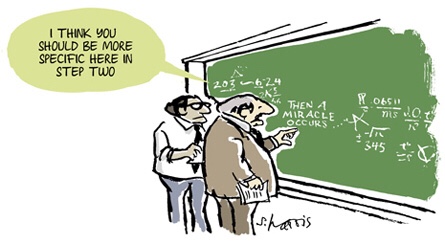
““Okay, so maybe there are miracles,” she admitted. “The problem is

that we need too many of them. It’s not a workable system.”

“No, I like it. A system of miracles. It’s the best description

of the universe I’ve heard yet. But you’re wrong about one thing. It

does work.”

“So we just sit around and wait for the next miracle?”

“No,” he said. “We work hard, like your father said. We also rest. And

play. We live.”

-TWIN

I’m a logical girl, and I like systems more than most people. But maps are no substitute for the world. Laws are no substitute for justice. Theology is no substitute for God. Plans are no substitute for life.

I don’t want to sit on my leaky raft clinging to the notion that it’s solid ground. I want to work with you to build a better ship. It doesn’t have to be very big; it just needs enough space for us to live. Then we can sail the unknown together.

“Something is happening, here, tonight. I feel it.”

“As do I. But I don’t know what it is.”

“You mean you have no name for it,” she corrected him. “We both cannot help but know what this is. We grow. We become.”

Wintrow found himself smiling into the night. “We become what?” he asked of her.

She turned to face him, the chiseled planes of her wooden face catching the reflected gleam of the distant lights. She smiled up at him, lips parting to reveal her perfect teeth. “We become us,” she said simply. “Us, as we were meant to be.”

–Robin Hobb, Ship of Magic

A Path to the Wilderness: Nnedi Okorafor

That about sums up what happens when I write, too. There’s too much magic in the world to pretend it isn’t there. This is why I’ve really loved reading Nnedi Okorafor. In her work, magic is an accepted part of the real world, though it isn’t a happy elven magic. More of the visceral and terrifying magic. An African magic.

Okorafor’s parents were Nigerian, both came to the USA to study and were forced to stay due to the Nigerian civil war. Nnedi was born and grew up in Illinois, but she began visiting Nigeria when she was young. She was a lover of science and a nationally recognized high school athlete until a complication in surgery to correct scoliosis ended in partial paralysis. That was when she began to write stories in the margins of her science fiction books. Eventually, she regained the ability to walk, but writing had become her life’s path.

Though Okorafor has written more than ten novels, I’ve only read two so far. Both are powerful stories of African women. Both women experience suffering in the form of racial oppression and misogyny. Both are filled with rage. Both rise up to change the world and even rewrite history.

“Human beings make terrible gods.”

― Nnedi Okorafor, The Book of Phoenix

I read The Book of Phoenix a couple of years ago. It was my first introduction to Nnedi Okorafor, and, appropriately enough, it burned a hole in my brain. Phoenix speaks, and her voice is powerful. She begins innocent, confused but also sheltered. By the end, she burns with rage. The whole book echoes with her fury. I’ll be honest with you, this isn’t the best written book ever. The other characters are a bit flat, and the plot jumps and wanders while motivations get blurry. But Phoenix is such a compelling character that I could not stop reading her story until it had burned itself out. She moved me.

“I was young but I hated like a middle-aged man at the end of his prime.”

― Nnedi Okorafor, Who Fears Death

Who Fears Death came to me much later, though Okorafor wrote it first. It’s better written than Phoenix, has many complex characters and relationships, and a plot that is more lineaar, though it isn’t the central point of the work. Onyesonu’s voice is angry, but it is a more controlled anger. It is more mature, which works better in a novel, but which I somehow found less compelling than Phoenix. Still, it carried the powerful drive to force a path ahead, through any number of awful things (and this reading is not for cowards) to a deadly conclusion.

“We’ll never know exactly why we are, what we are, and so on. All you can do is follow your path all the way to the wilderness, and then you continue along because that’s what must be.”

― Nnedi Okorafor , Who Fears Death

My favorite thing about Who Fears Death is the sense of inevitability, the fatalism that walks hand in hand with the rage and will to remake the world. It strikes me as a particularly African tension, and one that those of us who aren’t African can’t totally grasp. I can’t even put it into the right words. Of course, I can’t. That’s why you need to read Okorafor, and other writers like her, for yourself. Some things can’t be explained. They need to be felt.

I’m thankful to Okorafor for letting me share that world, even if just for a few hours.

“Science fiction is the only genre that enables African writers to envision a future from our African perspective.”

Nnedi Okorafor

“To know someone’s pain is to share in it. And to share in it is to relieve some of it.”

― Nnedi Okorafor, The Book of Phoenix

The Only Way Out is Through

Originally, TWIN was supposed to be a novel about survival. (It ended up being a novel about family. I suppose that’s not such a very big leap.) I wanted to throw a character I loved into an impossible situation and see how she would solve the most urgent problems first and build up to a sustainable and even beautiful resolution. What would she do if everything was stripped away? Where would she start?

“There was a horrible crunch right by her head and a howl.

‘There’s nothing you can do about that unless you breathe.’ Cara breathed.”

–TWIN

It turns out that all of the heroic deeds ever done have started with breathing. It’s what every soldier did first on the morning of June 6, 1944. It’s what Dr. King did just before saying, “I have a dream.” It’s what your mother did as she gave birth to you. It was Jesus’ last act before he died.

I take a lot of comfort from that when the impossible faces me. I can’t go there. I can’t finish that. I can’t be what they need.

But.

I can breathe. One breath. Then another. And then maybe I can bend my legs. And then I can stand. Another breath. Then another. I open my eyes and look around. And then I take one step.

“Start where you are. Use what you have. Do what you can.”

–Arthur Ashe

I’ve had this quote on my desk for over a year because this is everything. This accepting the situation you find yourself in. Really accepting it. And then working with what you have.

It’s not that you’re resigned to stay where you are, but that you don’t waste time wishing you were starting from somewhere else. This may not have been the way you planned to go, and maybe it’s not fair that you’re here. But your current location (no matter where it is) isn’t a detour from your life; it is your life.

When I was young, I thought that life was all about choosing your path. You would open the gate and see several roads before you, and it was up to you to pick the best one (most likely the narrowest, least traveled road). Once on your path, your chief concern was not to stray off of it. Like Bilbo in Mirkwood, everything would be fine if you stuck to the road. Let temptation lure you off, and it was all giant spiders and imprisonment.

Now I realize, of course, that life doesn’t work that way at all. There may be a set of paths to choose from in the beginning, but whichever one you choose, it won’t run straight to the destination you think. Life doesn’t pass through Mirkwood, where the road is safe and the only dangers are out there under the trees. Life passes through the Old Forest, where the paths shift under your feet and new paths open in front of you, where you can struggle on in the right direction, but the trees have a mind of their own.

I’m sorry to say there are no shortcuts through the Old Forest. There is only pressing forward, even when you’re not sure exactly where you’re going.

“Above all, trust in the slow work of God.
We are quite naturally impatient in everything
to reach the end without delay.
We should like to skip the intermediate stages.
We are impatient of being on the way to something
unknown, something new.
And yet it is the law of all progress
that it is made by passing through
some stages of instability—
and that it may take a very long time.”

—Pierre Teilhard de Chardin

You’re on the way to something unknown, something new. I know the ground underneath you sometimes gives way, and the road is much longer than you thought. But you aren’t alone in this forest. Under these trees, we’re all taking winding paths and tripping over roots and doing what we can. There’s no skipping ahead for any of us, only making it through.

“I walked home in a daze…I cried the entire way…When I walked in, my mother was waiting for me in the main room. She handed me her cup of tea as I sat beside her on the couch. The tea was very strong, exactly what I needed.”

–Nnedi Okorafor, Who Fears Death

I can’t give you a pair of wings to fly away from here. I can’t even draw you a map to the end. But I can make a cup of very strong tea. I can sit down next to you, and we can do the next thing together.

We can breathe.

It’s a place to start.

Naming the World

The summer before I turned seven, my family moved several states over to a place where I knew no one. We bought a house, but while we were waiting to move in, we stayed for a few weeks in small one-bedroom apartment. I think it was one bedroom. Honestly, I’m not sure. All I remember about the place was that my brother and I slept on the floor. This isn’t important because it was uncomfortable. I was six. The floor was fine. It’s important because I can still close my eyes and go back to lying on that floor in the semi-dark, listening to the music my parents were playing in the next room. It was beautiful and haunting, and I felt a heavy weight on my chest pressing in painfully. I lay there, breathing through the tightness around my heart, wishing that beautiful music would go away because it was making me feel worse. My brother lay silently next to me, and I wondered if he felt the same, but I didn’t ask. Even then I believed that speaking that heaviness aloud would make it crush me.

It was years before I learned otherwise.

I spent half my life avoiding negative emotion. When I was a kid and my friends sought out the thrill of being terrified by watching scary movies and raising their arms on roller coasters, I wanted nothing to do with it. Who wants to be afraid? When I was a teenager, and my friends luxuriated in the angst of feeling sad and misunderstood, moping about listening to grunge and reading the negative headlines with relish, I climbed a tree with a book and got lost better worlds. Who wants to be sad if you don’t have to?

For me, words were an escape, a way to be someone other than myself, a way to retreat from any reality that would be uncomfortable.

In short, I lacked courage, and so for many years I missed out on what courage could have gained me.

We kissed and I closed my eyes and inhaled lavender and her, and I felt so terrified and so in love that I realised they –the terror, the love –were one and the same thing.

–Matt Haig, How to Stop Time

You can trust a human being with grief. That’s what I tell the wardens. I tell them, “Just walk fearlessly into the house of mourning, for grief is just love squaring up to its oldest enemy. And after all these mortal human years, love is up to the challenge.”

-Kate Braestrup, The Moth Presents All These Wonders

There’s no life without risk. You want love? It walks hand in hand with pain. You want fulfillment? Reality is going to drop kick you, but that’s the only way to get where you truly want to be. As David Foster Wallace says in Infinite Jest, “the truth will set you free but not until it is done with you.”

Of course, the real sucker punch of it all is that refusing to acknowledge fear and sadness doesn’t actually make them go away. On the contrary, negative emotions grow in the dark. But what I discovered, to my delight and detriment, is that years can pass before they send shoots out to disturb your sunny day. In the meantime, denial looks like serenity, like self-control, like maturity. It’s great for the ego.

Just not so great for the soul.

“Briefly, he tried to tell himself he should not feel hurt. His parents had not meant to diminish him by their exclusion of him and his sister was under the stress of grief. Then he recognized the lie and turned to embrace what he felt and thus understand it. His mother and grandmother were pre-occupied. His father and his sister had both deliberately attempted to wound him, and he had let them succeed. But these things that had happened, and these feelings he now experienced were not faults to be conquered. He could not deny the feelings, nor should he try to change them. “Accept and grow,” he reminded himself, and felt the pain ease. Wintrow went to pack a change of clothes.”

–Robin Hobb, Ship of Magic

This is what I’ve learned, the way I am training myself to live. When I am faced with loss, with uncertainty, with obstacles and a world that’s upside down, I put words to what I see and what I feel. When I’m awkward and unprepared, the words are faltering and inadequate. When reality is harsh, the words are harsh. When my experience is painful, the words bleed.

Naming things takes away their power, gives that power to the namer. God gave Adam dominion over all the animals, and his first task as ruler was to name them. In ancient civilizations, parents named their children with care, believing that the name they gave would influence the outcome of their child’s life. Throughout history, slave owners have stripped their slaves’ names and given them new ones. If you refuse to acknowledge the way a person has identified himself, if you force him to respond to the name you have assigned, you assert your ownership every time he answers. Naming is a powerful act, for good or for evil.

When I was writing TWIN, I heaped problem after problem on my characters. (Because that’s the way the universe works, isn’t it? Once the hits start coming, they don’t stop until you’re good and pummeled.) Naturally, they resolve some things, but, as in real life, many problems have no resolution. The turning point for my characters, the first step toward making peace with what can’t be changed, is the moment they begin to name the world around them. Naming is thinking the unthinkable, familiarizing the unfamiliar, exerting control over the uncontrollable.

I still write about unexplored worlds, but not for the same reason I did as a child. I no longer write to be absent from my life, but rather to be fully present in it. I’ve stopped trying to skip to the end, where truth has set me free; instead I’m standing here while it works me over.

I’m no longer trying to escape the world, but rather, to name it.

Giving Birth

I never set out to write a science fiction book. TWIN was born from the blending of two things: my regular daydreams about deserted-island survival scenarios and a conversation between a brother and sister that showed up in my head one day. Over time, the brother and sister became more than just characters in a scene. They become people, and you can’t be a person without having a history and a home. So I gave them both.

“No matter what you may have heard, the characters don’t write their story. Oh, people love to believe that, and certain writers love to tell it–I was typing away and then all of a sudden it was if I had been possessed. The story was unfolding before me. I had been hijacked by my own characters. I was no longer in control. Yeah, yeah, yeah. What I like about the job of being a novelist, and at the same time what I find so exhausting about it, is that it’s the closest thing to being God you’re ever going to get. All of the decisions are yours.”

–Ann Patchett, This is the Story of a Happy Marriage

If I had been thinking about what would make an easy novel to write, I might have given them a time and place a little closer to mine. But I wasn’t writing; I was daydreaming. And the story played out thrillingly in a colony on a set of planets circling a far-off star. This was all fine because in my head I could be vague about the details, and the setting was incredibly compelling without anyone there to question how it would all work. The daydreaming part of writing really is the best.

But beautiful thoughts aren’t art. Art has to exist in the real world. A story isn’t a story until I give it physical form, until I give it words.

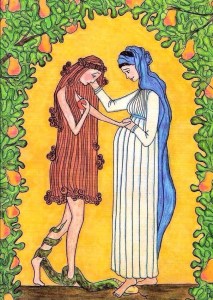
“…to paint a picture or to write a story or to compose a song is an incarnational activity. The artist is a servant who is willing to be a birthgiver. In a very real sense, the artist (male or female) should be like Mary who, when the angel told her that she was to bear the Messiah, was obedient to the command.”

–Madeleine L’Engle, Walking on Water

I love this idea of incarnation, of taking something insubstantial and giving it substance. I won’t be overly self-important and say that I am serving a work greater than myself. It’s just a story, but Cara and Tom’s story was one I wanted to tell. And just like that, I’m a forty-something mom writing a science fiction novel. Let’s just say that when people at your kid’s softball game ask you what you do for a living, that is not what they expect you to say.

Since I started working on TWIN full-time, I’ve made a conscious choice to read other science fiction written by women. It’s not a genre known for a lot of female voices, but when you look, you can find gold, from well-known pioneers like Ursula LeGuin and Madeleine L’Engle and Robin Hobb to newer artists like Nnedi Okorafor and Ann Leckie and Laini Taylor. I want to say, as feminists have tried to say about many things, that science fiction is science fiction no matter who writes it. The idea that there is an inherent difference between art made by a man and art made by a woman makes us bristle because we reject the long history of being told that our voice was less rational, less disciplined, less intelligent, just less. But can we reject that history without rejecting the differences that set us apart?

The women I read write powerfully. They write incisively. They write intelligently. They also write as women. This is a very real thing. I won’t try to define what makes a woman’s voice a woman’s voice because any definition would take away more than it added. Every female writer has a different voice in the same way that every writer has a different voice. But our voice is made up of all that we are, and among many other things, what we are is women.

We’re back to the idea of incarnation. When Mary gave birth to a child that was God, she also gave birth to a child that was a man. His human form came from his mother. He was God’s son, something completely unknown and unknowable, and he was also her son, and I imagine that he looked like her. This is the way our art works, too. We reach out and capture something, some truth, some reality, some intangible thing that matters to us all, but when we give it form, we also make it in our image. It speaks in our voice. It looks like us.

Though I voraciously read science fiction no matter who writes it, I find a resonance in what other women have written that makes the truths they’ve grasped for even more powerful to me. This is why we need art from everyone. We need art from men and from women. We need art from people of every shade of skin and every cultural background. We need art from the young and from the old. So we can see truth walking around with many different faces. And maybe find one that looks familiar. And maybe find ourselves changed by what we’ve seen.

In the next couple of weeks, I’m going to write more about about some of these women who are inspiring me. I want you to meet them, or at least the parts of them they’ll let you see in their work. I hope you’ll find, as I have, that their imaginary worlds ripple into your real world and leave behind patterns that you’d never have seen otherwise. It might get a little uncomfortable along the way, but I promise it will be worth it. First up, next week: Nnedi Okorafor. She’s going to light you up.

Leaf and Branch, Water and Stone

“What are you reading?” I asked my dad when he laughed out loud over his book.

He let me see it for myself. “In a hole in the ground there lived a hobbit…”

I was seven. I already wanted more.

“Would we like it?” my brother asked.

The answer was hours in the making, days and weeks living the adventures of Bilbo Baggins and then of his nephew Frodo and his faithful servant Sam. Dad did all the voices, he paused in all the right places, he read just one more chapter when we begged.

When I first visited Lothlorien, it was my dad’s voice that explained how elvish magic works. He made it deep and slow and resonant with wisdom.

“Are these magic cloaks? asked Pippin, looking at them in wonder.

“I do not know what you mean by that,” answered the leader of the Elves. “They are fair garments, and the web is good, for it was made in this land. They are elvish robes certainly, if that is what you mean. Leaf and branch, water and stone: they have the hue and beauty of all those things under the twilight of Lorien that we love; for we put the thought of all that we love into all that we make.”

Leaf and branch, water and stone.

For me the water was those hours of stories read out loud. Visiting Middle Earth and Narnia and the lesser-known country of Mensandor. It wasn’t the heroes that I loved. It was the journey they had no choice but to take. The friends they met by a chance so perfect it had to be fate. The impossible deeds done in tiny, ridiculous steps.

I still dream in stories because stories made me. Everything I make today has the thought of that first love.

Although, it wasn’t truly first, of course. The leaf and the branch came before, I think, though I didn’t recognize them until the stories watered them to life.

The branch grew from a seed of faith, planted before my earliest memories. A belief in a Creator, the same one who made the universe and also me. A constant awareness that what I could see, what I did in my little life, was not all that there was. There was something bigger, something grander, something more. A universe of mystery and purpose. A work of art beyond the scope of my imagination. And yet, I was a part of it. This story for the ages was not about me, but it was my story just the same.

The branches of that vine weave through every story I’ve ever told.

And those branches grew green leaves of deep connection, the first to sprout being love for my family. We bounced around the country as I grew up, different houses, different towns, different cultures, but this circle of four was a place of safety and belonging. A place to laugh and to argue, to make bold claims and to be believed. A place to sing songs and eat good food. A place to trust people even when I couldn’t totally understand them. A place to face a million unknowns and know there was always my brother facing them with me, maybe equally baffled by it all, but there just the same.

Relationships are complex and they only get more so as I grow older, but deep in the core of who I am those stubborn green leaves refuse to wither. Family, whether by blood or by choice, is not optional. Family is the heart of who we are made to be, complex and connected. Inextricably bound up together.

When I tell stories, they are stories of family; they are stories of what I love.

Leaf and branch, water and stone.

I was twenty when I dug down and unearthed my stone. On the brink of leaping into full-on adulthood and afraid that I was on the wrong path, I spent a summer at the foot of the Rocky Mountains. I had a job and room in my parents’ basement but my friends were far away. I stared at the mountains and felt the longing to disappear into them. I wanted to climb, but there was no one to climb with me. It was a turning point, looking up at where I wanted to be. The moment I decided that I would just go. I would find a map and learn to read it. I would pick a trail and strap on a backpack, and I would go. It would have been better to have someone go with me, but if there was no one, I would go alone. I wouldn’t sit around lamenting what I didn’t have. I went. I climbed. I found the most spectacular paths. It was all I could have hoped for. I have never looked back.

As much as I delight in words, action is what my heart craves. To go. To do. To risk. To walk the paths that I would otherwise only dream about. Eventually I found someone to climb with me, and that has taken me higher still, but stepping out is something we each have to do for ourselves.

So I write stories of risk, stories of growth and change and braving the unknown. I write stories that live because if we’re not living, there’s only one other option.

This writing itself is one those risks I take. Daring to think my words should be shared with others. With my new book, TWIN, coming out in a few weeks, I’ve turned to thinking about new projects and evaluating again why I even do this. I have no grandiose notions that my stories are changing the world, or even that they are changing the life of any one reader. So why do it?

N.D. Wilson said it better than I can:

“Growth requires food. Multiple times every day, throughout my childhood, I was fed. How many specific meals do I remember? How many peanut butter and jelly sandwiches do I remember uniquely as distinct from all the others? I remember meals the same way that I remember story times. The atmosphere and aura of feeding — goblets and goblins, milk and villains, ice cream and orcs. I was fed. I grew. Inside and out. We are narrative creatures, and we need narrative nourishment — narrative catechisms.”

This is my work. Just as I make dinner for my children every night and do my best to make it delicious as well as healthy for their bodies, so I keep telling stories, filling them with what has nourished my soul and captivated my heart and mind. No one story will be all that anyone needs just as no one meal will satisfy forever, but the sum of all the stories is a life. I so very much want for it to be a good life. For my readers and for myself.

So, leaf and branch, water and stone, I put the thought of all that I love into all that I make. That’s my kind of magic.

Checking In

Hello, friends! 

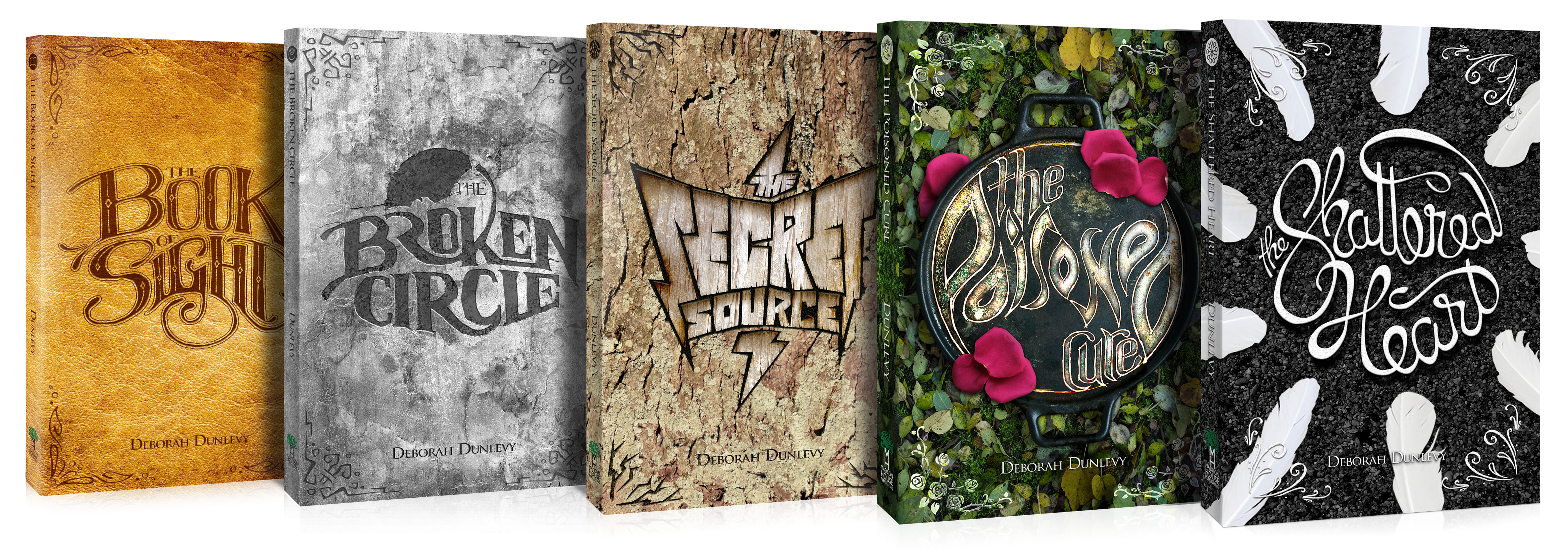
You may have noticed that things have been very quiet around here for the last month. Since the publication of The Shattered Heart, I’ve taken a little writing break. Now that The Book of Sight series is done, it’s time to contemplate other projects, and I’m having a lot of fun doing that. A whole new fantasy series is brewing in the back of my mind, not to mention a stand-alone sci-fi novel and a couple of shorter children’s books. 

I’ll be back in this space in February for my first ever “Build a World” experiment. I hope you all join me and pitch in any ideas you have. In the meantime, if you want to know what I’m reading and thinking about these days, check out my Tumblr. It’s full of random tidbits, and I update it pretty regularly.

See you in another couple of weeks! 

Deb

Winners!


Our big Book of Sight giveaway has come to an end, and we have our winners!!!

I entered the emails of all of the newsletter subscribers into RandomResult and we came up with the lucky two.

Congratulations to sagler and ruthann!

The winners have been emailed and will each be receiving an entire set of The Book of Sight to give away for Christmas or keep for themselves!

If you weren’t one of the lucky two, there’s still time to get yourself a set before the snow falls and the holiday fever sets in! You can get them in paperback or ebook, and if you buy the whole set together, there’s a discount!

Happy Christmas, everyone. Hope it’s merry and bright.