Ironic Giant

Henry Granger was an inventor.

He had a different job, of course, sweeping floors at the local elementary school, but he was not a janitor.  He was an inventor, through and through.  He only felt truly alive when he was in his basement workshop, tinkering with wires and scrap metal.

His mother, who lived in a tiny apartment on the top floor of his house and cooked him a terrible dinner every night at 6:00 would yell down the stairs, “Henry!  What’s all that racket?  Are you messing around with those tin cans again?”

Henry always answered politely, “Sorry for the noise, Mother.  Can’t invent anything without a little banging.”

“Looks like a bunch of junk to me,” she sniffed, but he just dipped his burnt meatloaf in some ketchup and said, “It always looks like junk before it’s finished.”

The pile of scraps on Henry’s workbench on the meatloaf night did look like junk.  Odd pieces of bent iron stuck out all over the place and the knobby round piece on top was covered in rust.  Thick wires crisscrossed in every direction like a child had tied the whole thing together.  No one could have guessed by looking at it that it was actually Henry Granger’s finest invention.

It took a few more days of tinkering to get it just right, but when Henry was satisfied that it was ready, he invited his friend George over to have a drink and see his masterpiece.  George worked with Henry at the school, and he was most definitely a janitor, but he was also a kind and friendly sort, and the two men got along like jam and bread.

“Whaddaya call it?” George asked when he saw the invention.  It didn’t look much better than it had a few days before, just as much rust and just as many wires.  The only significant change was that it now sported two arms and two legs along with its knobby head, so that it was clearly identifiable as a two-foot-tall robot.

“I call it Giant,” Henry said gravely.

“Seems like a silly name for such a little bitty robot,” said George.

“Well, that’s just the thing,” said Henry, who was fond of being just a little too clever.  “It’s an Ironic Giant.”

George blinked at his friend in confusion, then shrugged and took a swig of his Coke.  “Well, it’s a smart little thing.  Can it walk?”

In answer, Henry pressed a button, causing Giant to stagger forward a few steps.

“Well, I’ll be,” George said.  “Can it talk?”

“That’s the part I brought you here to see,” Henry said.  “That’s what makes it my finest invention.”

He pressed another button.  Giant began to hum.  Then it gave a great clunk.

“That means it’s ready,” Henry said.  “Ask it a question.”

“Um…what’s your name?” George said.

“Well, it’s Tiny, obviously, because Henry is so good at making sense.  And your name is Einstein, obviously, since you can so easily remember things you were just told two minutes ago.”

George set down his Coke.  “Whew-eee.  It really can talk.  That’s just amazing, Henry.  You’ve really got something there.”

“Because there was nothing before it could make noise.  Just the wind whistling over your workbench.”

“He just keeps going, don’t he?” George said.

“No, I don’t keep going.  I just shut off the second you brilliant humans are ready to open your brilliant mouths.  What could a robot like me possibly hope to say to such impressive beings?”

George chuckled.  “He’s the funniest little thing.”

“Which you would definitely be qualified to judge because you are such an expert in comedy.”

“I do like good comedy.  Which reminds me of this joke I heard the other day…”

“Oh, please.  Tell us a joke.  I’m sure it will be so original and entertaining,” said the robot.

Pleased with this encouragement, George told the joke.

“As expected, you’re quite the wit,” Giant said when he was finished.  Henry laughed freely since he knew George would think he was laughing at the joke.

That night, after George went home, Henry carried Giant upstairs to dinner at his mother’s.

“Don’t you bring that junk up here to clutter up my space!” said the old woman.

“It’s all finished,” Henry said mildly.  “I wanted you to see him because I made him just for you.  He’s a robot.”

“That’s the ugliest robot I’ve ever seen,” she said, slamming a plate of congealed mac and cheese in front of her son.

“And you’ve seen so many robots, I’m sure,” said Giant.

Henry’s mother looked offended.  “I don’t need to see a bunch of robots to know ugly when I see it,” she snapped.

“Of course not,” responded the robot.  “And I’m sure none of the ugly you’ve seen was ever, say, in the mirror.”

“Well, you little… Henry!  Don’t you let this junky old robot talk to me that way!”

“He doesn’t mean anything by it, Mother.  He’s a robot.  I’ll turn him off for a while if you like.”

“Right.  Because I’m the one he really wants to turn off,” said the robot.

“Well, just see to it that you do,” Henry’s mother said, pointing a wooden spoon at Giant.  “I’ll have no more words out of that pile of junk.”

“Of course, Mother,” Henry said.  He pressed a button.  The lights inside of Giant’s head winked out.

“Much better,” she said.

“Sure it is,” he answered. “I always love it when your voice is the only one I can hear.”

She narrowed her eyes at him, but as he was calmly eating gloopy mac and cheese, she said let the comment slide.

Downstairs later, Henry set Giant back on the workbench and turned on his power.

“Oh, there’s the brave man who made me,” said Giant immediately.  “Boy, do you ever know how to stand up to that woman.”

Henry chuckled.

“You must be so proud of yourself,” Giant continued.  “All the brains it takes to make something like me, and you’re using them so well.  You’re really brave working down in this basement and sweeping floors all day.  Those are some really big accomplishments.”

Henry’s smile faded.

“Being smarter than other people has done you so much good.  You’re really living the high life here.  That pasta tonight was really excellent looking.  I can see why you never leave here.”

With one sweep, Henry knocked the robot off the workbench, causing its head to fly off.  The lights went out.

“Irony is amusing,” Henry muttered, “but no one mocks Mother’s cooking.”


Narrative Intelligence: Why Your Kid is Smarter Than Your Phone

So I had this idea when I was mopping the floor a few weeks ago.  (All my best ideas come when I’m mopping the floor.)  I was thinking about my kids and how stories have always just been such a natural part of their lives and how now their brains just sort of have this automatic “story mode,” which I love.  Then I thought, why isn’t some kind of story intelligence included in Gardner’s Multiple Intelligences? (If you aren’t a teacher and therefore don’t know about MI, click through and read about them here.  Very interesting stuff.)  So I “invented” a new intelligence.

I called it “Narrative Intelligence.”  It’s not the same as linguistic intelligence because, though you can use words to tell stories, that’s only one way.  Narrative intelligence, as I conceived it, would be the ability to think in terms of stories, to understand the flow of narrative, and communicate it to others.  That communication can take lots of forms.  Telling a story in words, in pictures, in film, in acting (with or without words), in music (with or without words) touches on several of the other intelligences (linguistic, visual/spatial, bodily-kinesthetic, musical, even interpersonal and intrapersonal if you are getting into content), but it doesn’t encompass any of them.  It’s a separate kind of intelligence.  Narrative Intelligence.

Then, like any self-respecting inventor or new ideas, I googled  it.  Yeah, narrative intelligence is already a thing.  Of course it is.

Narrative intelligence is an important part of human cognition, especially in sensemaking and communicating with people. Humans draw on a lifetime of relevant experiences to explain stories, to tell stories, and to help choose the most appropriate actions in real-life settings.

This is exactly the sort of thing I was seeing in my kids!  And yeah, I didn’t think of it first, but still, how cool is that?  The idea that you are building a narrative of life experiences and processing it in such a way as to make appropriate decisions.  I’ve talked before about how the narrative we tell ourselves affects our lives.  In my mind, the idea is that by immersing ourselves in the right kind of stories and experiences we could build up our narrative intelligence, could refine the way we organize our experiences into a storyline that would drive us forward to be better people.

I may have mentioned before that I love grandiose claims.   Stay with me anyway, though, because this is where it gets interesting (to me, at least).

You know who mostly is interested in the idea of Narrative Intelligence?  Programmers.  Why?  Because in order for an artificial intelligence (e.g. a computer program) to really function, it needs to replicate or at least imitate the narrative intelligence of a human, and this is VERY, VERY difficult.  I read a bunch of impossibly complicated academic papers about this because I’m just that nerdy.  (This one was the most helpful.)  I’m going to break this down as I understand it, and hopefully it will make sense:

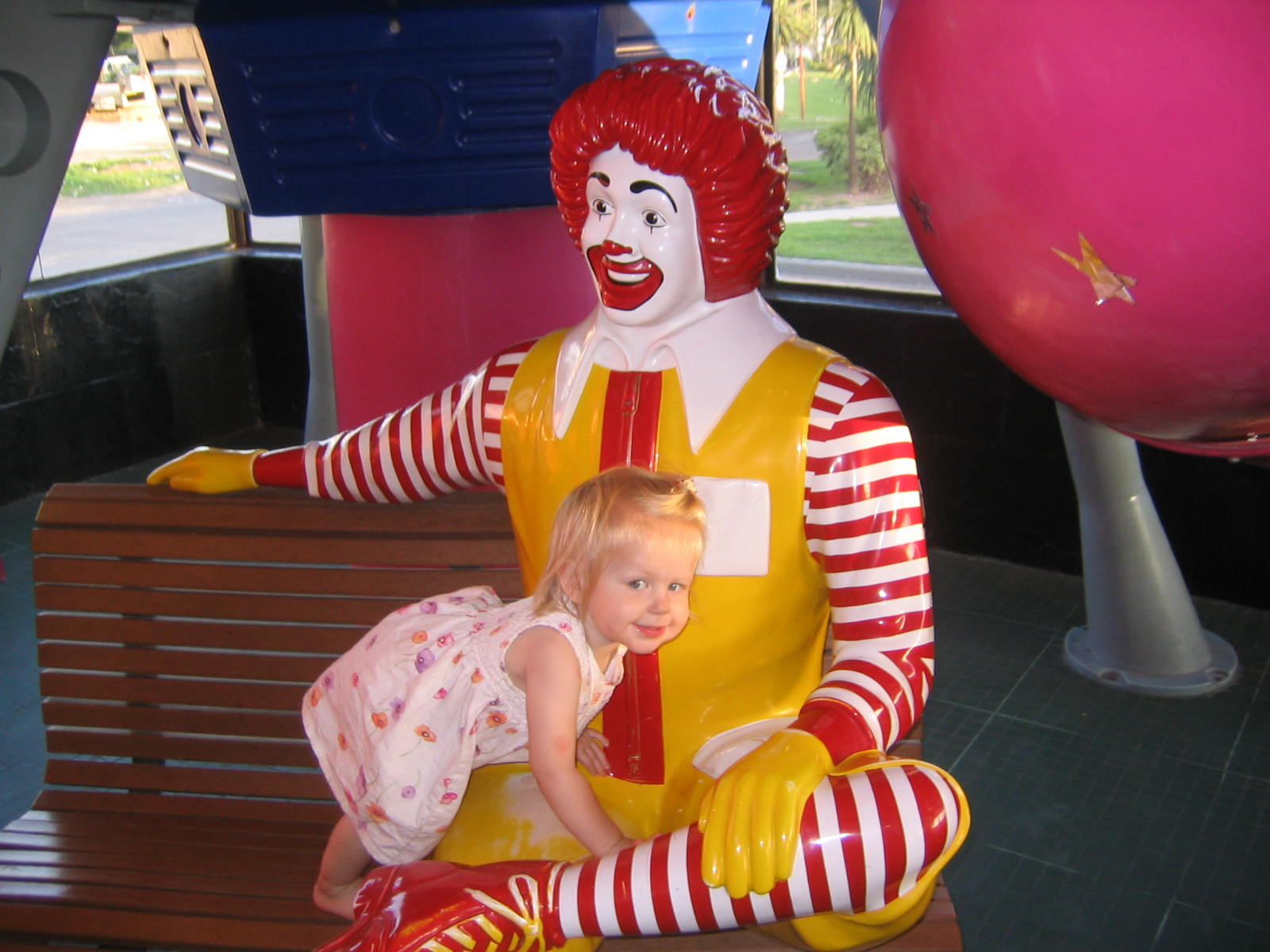
1. Humans tell stories and understand stories based on a whole lifetime of experiences.  These experiences and the stories they form also help them act appropriately.  (That’s our definition of narrative intelligence.) For example, every time a kid is taken to a McDonalds, his parents go first to the counter to order, then wait until food is put on the counter, then take it to a seat and eat.  Therefore, the child a) could tell a story that takes place in a McDonalds and have it make perfect sense, b) could understand a story about someone messing up that procedure and know why it was funny, and c) could appropriately order his own food when he goes to a McDonalds as an adult.

136_3681

2. A computer doesn’t have those life experiences.  Each and every one has to be entered into it by a programmer.  This is why a program that wants to present a realistic and adaptive narrative in a real-world situation is so expensive to make.  Because it takes a ridiculous amount of information to form a single narrative.  For example, a story about getting food at McDonalds needs information about the ordering procedure, but also about the behaviors of people waiting in line, which people do the ordering, what variations of the ordering procedure are acceptable and what variations are ridiculous, exactly how you pay and all the possibilities thereof, and on and on.  All so you can tell how you ordered a hamburger.  And what if it was from Burger King?  Does that change anything?

3.  Really smart people are working hard to come up with solutions to this problem.  These solutions are all over my head.

Do you find that all as fascinating as I do?  Okay, maybe you don’t.  I congratulate you for reading this far anyway.  Here’s what I take away from it all:

Our ability to tell and understand stories is what makes us better than computers. 

I mean, sure, my phone can quickly find out what phase of the moon we’re in when I’m not even sure what the phases of the moon are, can multiply 465 x 393 in seconds when I’d need ten minutes, and can remember all the phone numbers when I can’t even remember mine, but it couldn’t explain why it’s ridiculous for a man to sit in a McDonalds waiting for someone to bring him food he never ordered.

But I can.  My kids can, too.  And they could also make up three different funny back stories for why the man would be doing that.

That’s narrative intelligence, people.  And if computer programmers can spend hours and hours trying to build it into an artificial intelligence, just imagine what we can do to grow a brain that already has it. Not like a science experiment.  Like LIFE.  New people.  New places.  New experiences.  New stories.

What are we waiting for?


Boo Ha Ha!

ID-100106071

Even though I’m all about ghost stories (that don’t involve zombies) I think I’m just about done with the scary stuff for this year.  It’s time to laugh a little, don’t you think?

With that in mind, I bring you this little tale that is absolutely NOT written by me (I found it here.), but which made me laugh and which I’m dying to tell to my kids tonight.

Chris Cross, a tourist in Vienna, is going passed Vienna’s Zentralfriedhof graveyard on October 31st.  All of a sudden he hears some music.  No one is around, so he starts searching for the source.  Chris finally locates the origin and finds it is coming from a grave with a headstone that reads: Ludwig van Beethoven, 1770-1827. Then he realizes that the music is the Ninth Symphony and it is being played backward! Puzzled, he leaves the graveyard and persuades Tim Burr, a friend, to return with him.

By the time they arrive back at the grave, the music has changed. This time it is the Seventh Symphony, but like the previous piece, it is being played backward. Curious, the men agree to consult a music scholar. When they return with the expert, the Fifth Symphony is playing, again backward. The expert notices that the symphonies are being played in the reverse order in which they were composed, the 9th, then the 7th, then the 5th.  By the next day the word has spread and a throng has gathered around the grave. They are all listening to the Second Symphony being played backward.

Just then the graveyard’s caretaker ambles up to the group. Someone in the crowd asks him if he has an explanation for the music.

“Oh, it’s nothing to worry about” says the caretaker. “He’s just decomposing!”

I’m sorry.  I am.  I like puns.  Especially if they’re part of a whole story and not just a question/answer joke.

For kicks I’ve been sending one or two of these stupid fun little Halloween jokes in my kids’ lunches this week.  I decided to go for it, even though, to be honest, I was half-expecting them to come home rolling their eyes and telling me to stop being so…Momish.  But they didn’t.  They came home laughing and telling each other the jokes they’d gotten.  They love them.

Aaaand that’s why you keep trying things as a mom.  Because you just can’t ever predict what they’ll think is fun.  And who wants to miss out on fun just because you were afraid of being mocked?!

I mean, isn’t that the point of Halloween?  To have fun at the risk of being mocked?  So go for it.  Break out your worst puns today.  Word play is good for the soul.

And let’s face it, your kids are going to think you’re weird no matter what you do.  Might as well lean into it.

Photo courtesy of Tina Philips at freedigitalphoto.net.

To Face Your Fears

ID-100271393
The street is dark
The air is cold
It’s me and my brother
My sister’s too old

A creepy glow
Unnatural green
I think nothing of it
It’s Halloween

A figure jumps
It’s black and fat
I know that tail
My neighbor’s cat

Fearsome smiles
And flickering flames
Just jack-o-lanterns
Ours look the same

A horrid face
Boo who? it asks
But I’m not scared
It’s just a mask

My brother stops
Your turn, he says
Wait? By myself?
In my fairy dress?

I swallow fear
I grip my bag
My hands still shake
My wings still sag

Take courage now
There’s candy there
It’s just three words
It’s only fair

I stand up straight
I ring the bell
Trick or Treat!
I loudly yell

A friendly smile
The candy falls
The chocolate kind!
The best of all!

I slip away
My victory won
Bring on more doors!
Bring on more fun!

If Halloween’s
The perfect time
To face your fears
Well, I’ve faced mine

Photo courtesy of Stuart Miles at freedigitalphotos.net

Some Monday Morning Treasure

I keep hoarding things I want to show you all, and since none of them are quite worth a whole post, I thought I’d pile them up like treasure for you here.  It’s like I’m your own personal dragon.

So come on, it’s Monday.  Slack off for a few minutes and click around.  I promise it will be fun.  Like a little adventure from your desk, there and back again, as it were.  It’s like I’m your own personal wizard.

(Can you tell I was reading The Lord of the Rings this weekend?  Out loud to my kids outside on a beautiful fall day while they carved pumpkins.  This was, incidentally, how LOTR was meant to be read.)

IMG_0545
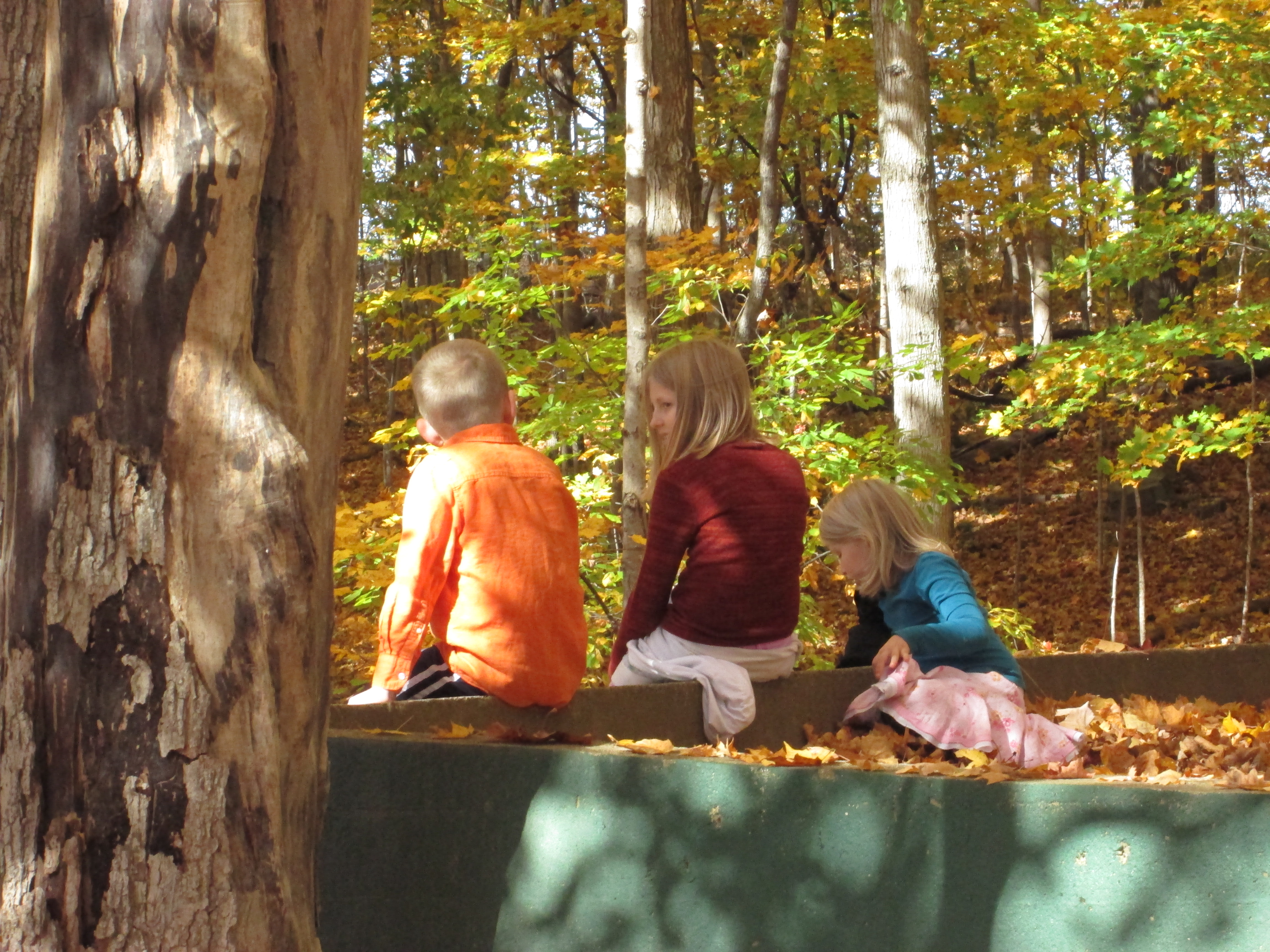
My hobbits taking a rest from their adventures and waiting for elevensies. And now I promise I’m done with the LOTR references.

  • Speaking of dragons (sorry! not really done with the references!), have you seen this?  How awesome is that guy?  I can’t decide if I like his artwork or his beard better.
  • Take the time this week to read Mark Twain’s “How to Tell a Story.”  Not only will it make you laugh, you’ll get a great ghost story to use on your kids on Friday.  (I don’t recommend using the accent.  Twain was a man of his time.)
  • Icelanders haven’t totally given up their belief in fairies.  I absolutely loved this article, most of all because there was no hint of mocking.  We should all leave a little more room for the magical and mysterious.
  • The 22 rules of storytelling, as tweeted by Emma Coats, Pixar storyboard artist.  These are pretty great.  I particularly loved #4, #7, and #13.
  • Dooce shares a storytelling game you can play in the car.  I am totally stealing this one.
  • This website is seriously cool.  It lets you create your own comic book using predesigned features.  I’m either going to show it to my kids and let them go crazy or lose several hours making my own.  We’ll see how the week goes.
  • As proof that inspiration can come from anywhere, I want to write a story based on each and every one of these amazingly wonderful lamps.  There would be some seriously creepy stories in that collection.

Enough treasure for one week.  You have costumes to finish and candy to buy.

And don’t forget to try out a ghost story or two on the kids.  Mark Twain is my witness, it’s an American tradition.  We all have to do our part.


Get Your Terror On (Even if You’re a Pansy Like Me)

I don’t do vampires.

I don’t do zombies.

I don’t do horror.

These are the rules.

I am not one of those people who hides from the reality of evil.  I know people suck.  I know bad guys are real.  I know life is full of pain and horror.  I just choose to confront harsh realities in…reality.  I choose to spend my life diving into the pain around me, and I turn to reading mostly for escape.  That’s the kind of reader I am.  I generally want something adventurous to give me a break from the humdrum.  I generally want something light and magical to let me forget the dark and tragic in the real world.  I generally want happy endings to satisfy the part of me that sees to many sad endings.

So I don’t do the dark stuff.

Except sometimes.  Sometimes I do.  Under very strict circumstances.

Here are the requirements:

1.  The book has to come highly recommended by people I respect.  It’s a limited pool of people, but if they tell me I should read it, that means a lot.

2.  It has to be about something.  I mean, something besides the fact that humans can be horrible and twisted or that there is terrible evil out there, possibly in the form of monsters.  I know this is true.  I just only want to read about it if a greater purpose is being served.

3.  It has to be really, really well written, with characters I can care about, at least one of which has to be someone I can root for.  Absolutely no books with no good guys.  I can’t handle it.  They don’t have to be perfect.  They can be very, very flawed.  But I have to be able to want someone to win.  Otherwise, what’s the point?

Want to know which ones have made the cut?  Here are the scary reads I think you should absolutely try:

  • The Stand by Stephen King – If, like me, you mostly avoid King’s stuff because it’s not your cup of tea, you should still read The Stand.  Seriously good end of the world stuff, and yes, there’s some horror, but it’s way more about the characters, almost all of whom are fascinating, and the relationships between them.  There’s some epic good vs. evil here and a healthy dose of “who knows what spiritual nonsense may turn out to be real”, but the part that clenched it for me is the fatalistic streak that runs through the whole thing.  I really dig it. I’ve actually read this more than once.  It’s that good. (And the mini-series is definitely worth watching, but only after you’ve read the book.)
  • World War Z by Max Brooks – If you saw the movie, just disregard all of that, as it’s nowhere near the same thing.  (Though to be fair, I liked the movie.  It did take a few of the great elements from the book and use them wisely.  It also avoided almost all of the potential traps of a zombie movie.)  This is the only zombie novel I have ever consented to read, and the reason I stuck with it was that it read like a history book.  I loved the feel of reading a history of something that never happened.  And I loved the problem-solving, survivalist, how-to-rebuild-the-world elements.  There are some disgusting parts, but that’s not the main point of the book.
  • The Passage  by Justin Cronin – I was quite a long ways into this book before I realized it was about vampires (sort of).  I almost put it down then (because, principles), but I couldn’t.  I was too interested in Amy’s character.  This book is broken into two sections and both have amazing characters.  This is also an end-of-the-world scenario and reads similarly to The Stand, but the horror here is laced through with such sadness that it is somehow even more human.  In a way, that makes it creepier, but it also makes it impossible to put down.  For the record, this book (and its sequel The Twelve) is still the only vampire book I’ve ever read in its entirety.  Because, principles.

Hmm…now that I’ve written this out, I realize that maybe my unspoken requirement all along was that the book has to involve the end of the world as we know it.  I guess that would fit the escapist bill.  Blowing up the world: the ultimate escape.

So what do you say?  Want to watch the world end this Halloween?  You can do it in your pajamas from the comfort of your own bed after one quick trip to the library (or a few clicks on Amazon).

You’ll probably want to leave the lights after, though.  Just saying.


Battle of the Birds, Pt. 2

ID-1006838

Jessie had always wanted a pet bird.  She loved the way little birds hopped around and their chirpy songs.  She had begged her mom to get her one for her birthday, but her mom said they were noisy and carried germs and it was a horror to clean out their cages.  Jessie promised to do all the work, but her mom was having none of it.  It was a small satisfaction that she also said a firm no to Jason having a pet snake, but Jessie still felt that her mother was being unfairly biased.

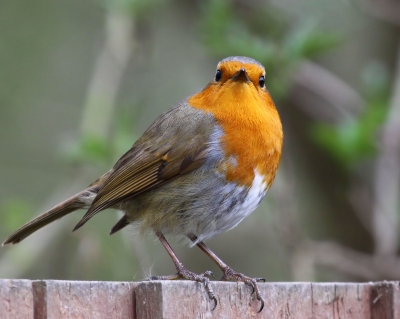
She was playing in the yard when she first saw it.  A sweet little robin was sitting on the fence, its little red belly standing out against the rest of the soft brown.  It looked her right in the eye, and Jessie would have sworn she saw a twinkle there.  It didn’t fly away when she walked slowly closer.  It just gave a little hop and landed back where it had been.   Jessie walked right up to the fence, barely daring to breath.  Slowly, she held out her hand.  The robin cocked its head to one side and held its ground.

“You are the cutest thing,” Jessie said softly.  “You know I won’t hurt you, don’t you?  Aren’t you the smartest and sweetest little thing?”

The robin ruffled its feathers and stared back at her.

“Do you want to be friends?” Jessie murmured.  “I could show you my room.  You’d like it in the house.  It’s warm and safe in there.”

The little bird hopped again, and Jessie held her breath.  Then it hopped right into her hand.  It was so small that it fit perfectly in her palm.  Jessie felt happier than she’d ever felt.

Slowly, slowly, and very carefully, Jessie walked into the house.  Fortunately, her mom was in the basement folding laundry.  Jessie carried the robin into her room.  After she had shut the door, she set it carefully on the bedpost.  The robin hopped up and down, then fluttered from place to place in her room, exploring.  It gave a little twitter, not loud enough to give them away but just enough to show that it was happy.  Jessie laughed.  This was the best day ever.

**************

At the dinner table that night, Jessie couldn’t stop grinning.  She ate all her food and only at the last minute remembered to complain about the green beans so her mom wouldn’t get suspicious.  Then when no one was looking, she put a few in her pocket to feed to the robin.

Jason started in with some story about how his friend Jimmy had been attacked by a cardinal.  He claimed that it landed right on Jimmy’s head and pecked his ear until it bled.  Jessie rolled her eyes.  Jason was such a liar.  Just last week he had eaten the last four cookies in the jar and then made up a story about a homeless guy coming by and begging for food.  It was pathetic.

Back in her room that night, Jessie fed green beans to the robin.  It twittered again and then sat perfectly still while she kissed it goodnight.  Jessie snuggled into her bed and felt the robin snuggle down on the pillow next to her.

*************

At school on Monday, Jessie felt like she was carrying around the world’s best secret.  Not only did she have a pet bird, she had caught it herself and it ate right out of her hand and slept on her pillow.  She wanted to tell all of her friends, but she didn’t think any of them would believe her.

“You guys will never guess what happened to me this weekend,” said Madison Snively.  “A little bird flew right in my window and landed on my bed.  At first I was scared, but when my dad came in to get rid of it, it landed on his shoulder and started singing.  It was so cute.  My dad looked it up.  It’s a finch.  We’re going to keep it.”

Jessie had always disliked Madison Snively, but now she positively despised her.

************

Every day that week, Jessie rushed home from school to check on the robin.  It was always waiting for her, snuggled up on her bed or hopping around her dresser.  It always greeted her with a happy twitter.  Jessie would spend the afternoon in her room, feeding the robin seeds or lettuce and doing her homework with it perched on her shoulder.

She still hadn’t told anyone about it.  Four more girls at school had talked about their new pet birds.  Apparently getting a bird was the newest fad, like silly bands that you had to feed and clean up after.  Jessie didn’t like feeling like part of a fad.  Her robin wasn’t like that.  He was a friend, not some pet she would drop when it was no longer new and cool.

On Friday, she bumped into Jason’s friend Jimmy in the hallway.  He had a big bandage over one ear.  She remembered Jason’s ridiculous story about the cardinal and wondered what had really happened to Jimmy.

That day on the way home from school she passed a huge raven sitting on a mailbox.  It cawed loudly and obnoxiously to her, and Jessie hurried by as quickly as she could.  Creepy old thing.

*************

Saturday morning was sunny.  Jessie saw that robin was sitting at the window in her room, staring outside.  She thought maybe he wanted to go out and fly around for a while.  She hoped he didn’t want to leave forever.  She wondered if she should let him out for some air.  If she did, would she ever see him again?  Maybe she should just keep him locked up safe inside.  After a while she decided that was cruel. She opened the window.  The robin flew out.

Jessie ran downstairs and out into the back yard.  She watched as the robin fluttered up into the trees.  She heard the twittering of many birds, and then a whole flock of them swooped up out off the trees and off into the distance.  Jessie almost cried.  Her robin had gone with the other birds.  She would probably never see him again.

**************

No one was in the woods that day.  No one saw the great flocks of tiny birds that swooped in and landed on every available branch.  No one heard the echoing rustles and twitters and warbles as they waited.

Several people noticed the circling hawks.  Men and women stopped to comment on how they had never seen so many in one place before.  A few children ran inside, telling their unbelieving parents that they had seen owls and eagles.  One old man counted thirteen ravens fly past his front porch.  He went inside and locked the door.  It was a day for bad luck.

No one was in the woods that day.  No one saw the hunting birds descend or the songbirds launch their attacks.  No one saw owls fall under the weight of dozens of starlings.  No one saw an eagle taken down by a hundred finches.  No one walked under the trees where ravens’ bodies littered the ground and feathers drifted down like fall leaves.

The next day, the sky was clear of birds of prey.  No one thought anything of it.

************

Jessie almost cried with relief and joy when her robin came home early the next morning.  She woke up and there he was, sitting outside her window.  She opened the window and let him in, noticing that his wing was a little crooked and there was some dried blood on his feathers.

“Oh, you poor thing!” she crooned. “Did something try to get you?  Come here.  We’ll fix you up and keep you safe.”

Jessie spent the day taking care of the poor sweet robin, never imagining that all across town little birds were coming home to their new families similarly injured and being cared for just as she cared for her robin.

That night, Jessie once again shared her pillow with the little robin.

She fell asleep happy and never once gave a thought to how sharp its little beak was or how quickly it’s tiny claws could move.

It was the last time she would overlook such important things.

Image courtesy of Paul Brentnall at freedigitalphotos.net.

Ask the Kids: What Makes a Great Story

It’s week two of fall break, and yes, now I remember what it’s like to have all three kids around all the time.  It’s basically impossible to write with everyone in and out and bored and playing and loud and…louder.  So.  Since I can’t write as much as usual, I figured I should take advantage of their being around to ask them some questions.  As you know, I’m working on listening more these days, so this is my chance to find out what they like in a story.

IMG_5613

What kind of stories do you like best?

Lucy (5) – Stories about princesses and I like stories about pets and I like stories about witches, stories about castles, stories about horses.

Scott (8) – Mysteries and tragedy

Ellie (10) – Adventures that explore fairy tales

Which do you like better, a happy ending or a sad ending?

Lucy (5) – Sad endings. Because I usually like the sad endings when they have…like,that it’s having a scary story. I like those scary stories.

Scott (8) – In a series, a happy ending to the series but sad endings to the books.

Ellie (10) – Depends on the story. Like when somebody loses somebody, when somebody dies, I like that. I don’t like other sad endings, like the good guys lose.

When you are making up your own stories, where do you get the ideas from?

Lucy (5) – I see pictures and get the ideas.

Scott (8) – Other stories and things I’ve experienced myself.

Ellie (10) – Other books and things that happen in my life. Mostly from books really.

Who is your favorite story character and why?

Lucy (5) – Hermione.  I don’t know why.

Scott (8) – Jaques Snicket, because he carries the most mysteries.

Ellie (10) – Sabrina from The Sisters Grimm, because she’s like me.  A lot like me.

Pretty interesting stuff.  I mean, a lot of it I knew.  It’s not a big surprise that my five-year-old likes stories about princesses or that my big kids love characters from their favorite books.  I knew Scott was into  mysteries and Ellie prefers fantasy adventure.  The part that really got my attention was the happy ending/sad ending bit.  Did you catch that?

They all love a sad ending.

Not a depressing ending.  Not a bad ending.  But they like the sad in there.  They want to be scared.  They want some grieving.  I think maybe the sticky sappy happy world of so many modern children’s stories (books or movies) is actually really unappealing to them.  Good to know.  Good because it helps me as a writer of stories for kids and good because as a mom it makes me pretty happy that my kids prefer a little grit to their fairy tales.

I also loved the totally opposite reasons that Scott and Ellie chose their favorite characters.  Ellie loved that she could see herself in Sabrina.  She wants to relate, to be in the story.  Scott chose the character that was the most mysterious, the one he knew so little about, the one with all the tantalizing clues that made him want to know more.  He wants to solve a puzzle, and the person who offers him the most challenge interests him the most.

Just goes to show you that we’re all looking for different things when we turn to stories. To learn. To escape.  To be challenged.  To be dazzled.  To feel something.  To not have to feel anything.

Not every reader is looking for the same thing.  Not every listener is hoping for the same experience.  I think that gives us a lot of freedom as storytellers.  I can tell the story I have inside me.  If it has the ring of truth (remember they didn’t want anything too scrubbed up and happy), it doesn’t matter if it’s cerebral or earthy, funny or scary, whimsical or realistic.  It will find an audience somewhere.  It won’t be for everyone.  (Better let go of that dream now.) But it will be for someone.

So what do your kids like?  Have you asked them?  Maybe they’ll surprise you.  Or okay, maybe they’ll just grunt.  That happens, too.  (If it helps, I bribed mine with banana bread to give me some answers.)  And maybe, just maybe, knowing what lights them up will give you a new way to connect with them.  Because maybe you like sad endings, too, or maybe you know about a mysterious figure that will capture their imagination, or maybe stories from your past will show you as a character who is very like themselves, a person they can relate to.

Ask.  You never can tell what they’ll say.

I know I’m already making my next list of questions.


Battle of the Birds

“They’re all afraid of you, you know,” said the owl to the raven, who was trying to smooth out his ruffled feathers.

“Then they’re not very bright, are they?” croaked the raven.  “I was just trying to warn them that the cardinal has made his home in those trees up there.  Why was that a reason to throw rocks at me?  No good deed goes unpunished, I guess.”

“It’s your dark color and raspy voice, I think,” the owl mused. “They find those things creepy.”

“Oh, go back to sleep if you can’t say anything helpful,” snapped the raven. “It’s not like I can change my feathers or my voice.  And I still don’t think those things would matter if that stupid poet hadn’t written that stupid poem.”

Never….more…,” chuckled the owl.

“Shut up,” said the raven.  His feathers were back to normal and he looked properly disgusted.  “You don’t exactly have the friendliest reputation with them.  All that flying around at night when everyone else is sleeping.  Are you telling me that isn’t creepy?”

“Yes, but they love me,” preened the owl.  “They think I deliver mail for magical people.”

A derisive caw was the only answer that deserved.

“Don’t worry,” said the owl, his voice getting sleepy again.  “Look.  They didn’t listen to you.  They’re about to go into the woods, so you’ll get the last laugh after all.”

“Serves them right,” said the raven, but he didn’t mean it.  His black feathers hid a very soft heart, and he really hated that two-faced cardinal.

As the owl went back to sleep, the raven flew up over the distant woods, just to keep an eye on things.

*********************

Tommy had an uncomfortable feeling.  He wished they hadn’t thrown rocks at that nasty raven.  True, it had freaked him out perched on that fence post and cawing at them like it wanted to eat them for lunch, but he would have just hurried away if the other boys hadn’t dared him to hit it with a skipping stone.  He hadn’t wanted to look like a chump.  And for a minute it felt good.  His rock was the only one that landed.  He’d always had the best aim.  Still, his grandmother had told him once that people who were cruel to animals would be visited by crows in the night and have their eyes pecked out.  Of course he didn’t believe that.  But he didn’t feel comfortable.

His friends were laughing and joking as they ducked into the woods.  Tommy laughed with them.  He didn’t want to seem weird.

Jimmy saw the cardinal first, pointing at its bright red body and daring Tommy to hit it with another rock.

“Nah,” Tommy said. “That’s a cardinal. They never hurt nobody.”

Jimmy said it was too small anyway.  Tommy heard the taunt in the words, but he ignored them.  Just like he tried to ignore the cardinal as it hopped from branch to branch, following them.

When they got to the stream and the log that made a rough bridge across it, the cardinal was still with them.  Tommy watched it as he waited his turn to cross.  He had always liked cardinals, liked their bright color and distinctive plume, but this one felt wrong.  It sat glaring at them out of one beady eye, and Tommy wondered why he had never noticed how black a cardinal’s eye could be.

On the other side of the creek, the boys came to the meadow where they usually played ball.  A strange rustling sound greeted them.  Carl had the ball under one arm, but no one started the game.  Instead, they all stood staring around.  In every branch of every tree were birds, not scary birds, just little robins and sparrows and finches.  They chirped and twittered and sang, a cacophony of cheerful noise.

“What the…? Where did these come from?” Jimmy asked.

“My sister’d go crazy if she saw this,” Jason said.  “She’s always beggin’ my mom for a pet bird.”

“You could take one home,” Carl said. “Enough to go around.”

Tommy said nothing.  That uncomfortable feeling was growing.

Something whooshed right past Tommy’s ear, and he ducked without thinking.  The other boys laughed.

“Just that cardinal, scaredy-boy.  You think it was going to take your head off or something?” Jimmy had barely finished the words when the cardinal landed on his own head.  “Hey! get off me!  Get off, you!”

Jimmy batted at the top of his head, but the cardinal just hopped out of the way of his waving hands and pecked hard at Jimmy’s ear.

Jimmy screamed.  “Ow!  Get it off!  Get it off me!”

Tommy and the other boys rushed at Jimmy, yelling to scare the bird away.  It landed two or three more strong pecks on Jimmy’s head before flying off to the top of a nearby tree.  Jimmy was yelling and crying and blood was dripping down his forehead.  Carl had dropped the ball and was yelling already under the trees, yelling at them all to get out of there.  Jason and Tommy grabbed Jimmy by the arms and hurried him away.  Even with all of Jimmy’s yelling, Tommy could hear the silence behind them.  Every single one of those sweet little birds was silent and watching them.

“Tweeeee, twerp, twerp, twerp, twerp!” the cardinal called loudly.  Tommy heard the taunt in the song, but he ignored it.

Suddenly all the birds burst into joyful song again.

The boys ran full-out down the path, leaving the twittering meadow to the care of the bright red bird, calmly smoothing his feathers.

*******************

The raven circling high overhead saw the red spot and heard the laughter of his little friends, and his heart was heavy.  He had known that cardinal was no good, but he hadn’t heard that so many had flocked to his side.

The raven watched as the boys ran crying through the woods.  It was too late for them.  They had already proved that they couldn’t listen.  The hunting birds needed to be warned, though.  The success of this attack would just encourage the cardinal to make more.

The raven wheeled away, his harsh caw drowned out by the wind and the sound of a thousand tiny wings.

******************

To be continued…

Reliving Mush Mommy

We had a really busy weekend, full of wonderful people and good times and amazing food.  I’m exhausted.  It’s Monday morning and it’s raining and my house is full of children because FALL BREAK!  And man, did we ever need fall break, and this is going to be a great couple of weeks, but none of that changes the fact that this morning my eye is twitching and no amount of caffeine has yet been enough to convince me to be productive in any way.

Instead, I find myself wondering what would happen if I just…didn’t.  What if I just got back in bed and went to sleep and let the kids roam free for the day?  What do you think? Odds on their survival?  I’m sure they would find food for themselves and all still be alive at the end of the day.  I mean, I’m mostly sure.  I’m definitely sure that it would be an interesting story.  Technically, if something I did produced an interesting story, then that would be me being productive, right?

My justification knows no bounds.

In any case, this morning has been reminding me of the many (MANY) mornings that I felt like this when my kids were toddlers.  Back in those days, my brain more or less always had this mushy quality.  Those were the days when I always went to bed with dishes in the sink because there was no strength left after dinner and bedtime to even look at them.  Those were the days when I invented rocket ship games that let me sit on my bed while the kids went on “missions” because I had to nurse the baby and also because if I walked around the house I would trip on toys and be too tired to bend over and pick them up.  Those were the days when I forgot what it felt like to feel rested and productive and intelligent and clean.

It was one of those despairing days that I turned that fuzzy-headed feeling into a story of its own.  Somehow, that story became my kids’ favorite, and I told it over and  over to them for weeks.  It is a monument to the fact that you can turn absolutely anything into a story if you’re desperate interesting enough.

This morning, in an attempt to encourage all you moms of littles as I relive that hazy feeling for a day, I bring you MUSH MOMMY.

Once upon a time there was a mommy who loved to tell stories to her children, Molly, Matt, and Maggie.  Every morning when they woke up, the children would say, “Please may we have a story?”  Then their mommy would tell them a story while they ate their breakfast.  She would tell them stories while they were doing their work, tell them stories while they were walking to school, and tell them a brand new story each night as she tucked them into bed.  The last thing they would hear before falling asleep was, “And they lived happily ever after.”

That falling asleep was where all the trouble began.  It started with Molly, who was eight.  Molly decided she was too old to go to bed at the same time as her baby brother and sister.  So she asked for extra stories, and when that didn’t work, she asked for a drink of water, and when that didn’t work, she asked for some toys to play with in bed, and when that didn’t work, she cried.  With all this asking and crying, it was much later than normal when Mommy was finally able to get Molly to sleep.  Then is was Maggie’s turn.  Maggie had fallen asleep with no trouble at all, like the sweet little baby that she was.  But just when everyone else had begun to dream their happiest dreams, Baby Maggie woke up.  And she cried.  And she cried, and cried, and cried.  It was a very long time before Mommy could get her to go back to dreamland.  By that time, Mommy was very, very tired, and she sighed happily as she crawled back into bed.  Just then, Matt woke up.  He didn’t mean to stay awake.  He just missed his Mommy.  So he got up and went to her bed and curled up against her.  He was a very sweet and snuggly boy…all except for his elbow.  His elbow was very sharp and pokey, and it was determined to have as much space as it needed to stick out.  Mostly the place where it decided to stick was in the Mommy’s back.  After a while of being poked by elbow, Mommy got up and carried sleeping Matt back to his own bed.  Then, just as she settled back into her pillows with a smile….it was morning, and Molly and Matt and Maggie were waking up and asking for a story with their breakfast.

The first morning after a  night like that, Mommy felt like her head was a little mushy, but she shook herself and drank some coffee and made up a new story.  The second morning, Mommy knew her head was quite mushy, so she shook herself and drank some coffee, but she still couldn’t think of a new story, so she told everyone Molly’s favorite fairy tale.  The third morning, Mommy’s head was nothing but mush.  She drank her coffee, but it just seeped right out of her mushy head.  She tried to remember Matt’s favorite story, but her mushy head could not do it.   Matt had to tell the story himself.  The fourth morning, not only was Mommy’s head mushy, now her arms and hands had turned to mush, too.  Molly had to make breakfast for everyone, and she tried to think of a story, but Maggie cried because her breakfast was too hot and Matt complained that Molly’s story wasn’t exciting enough.  The fifth morning came, and now Mommy had turned entirely to mush.  She tried to get out of bed, but her mushy legs couldn’t stand up.  Molly, Matt, and Maggie didn’t know what to do.  They tried to make her sit up, but she was too mushy.  The tried to roll her out of the bed, but she just glooped right over the edge and landed in a pile of mush on the floor.  Molly called the doctor, who rushed right over.

“Yes,” said the doctor, “this is the worst case of Mommy Mush I’ve ever seen.  It’s a good thing you called me when you did.  Tell me, now, has she been getting any sleep at night?”

Molly, Matt, and Maggie just looked at the floor.

“That’s what I thought,” said the doctor.  “Well, fortunately, Mommy Mush is curable, but it’s going to take  some very fast music and then A LOT of sleep. “

So Molly went on put on their very loudest dance music, and they all watched anxiously as Mush Mommy slowly turned back into their real Mommy.  Only when she was able to smile a very, very weak smile did the doctor lift her off the floor and back into her bed.  Then he turned off the light, and they all tiptoed out of the room and let her sleep.

It was a very long day for those children without any Mommy to tell them stories, but Matt and Molly tried to take turns telling all the stories they could remember.  And that night when it was time to go to bed, Molly went straight to sleep without any complaining.  In the night, Maggie woke up and wanted to cry, but then she thought of Mush Mommy and grabbed her blankie and went back to sleep.  A little later Matt woke up and wanted to curl up by Mommy again, but instead he cuddled down in his blankets and dreamed of having his Mommy back to normal again.

In the morning, Mommy was all better.  She got up and made breakfast with no signs of mushy hands.  At breakfast, she told them the best story ever.   And of course, they lived happily ever after, sleeping all night long every night.

If only it could be so easy in real life, right?  Good luck, Mush Mommies everywhere.  May your coffee be strong and your children be patient (or at least easily pacified by TV).

It gets better.  (There are still days, but it gets so much better.)